
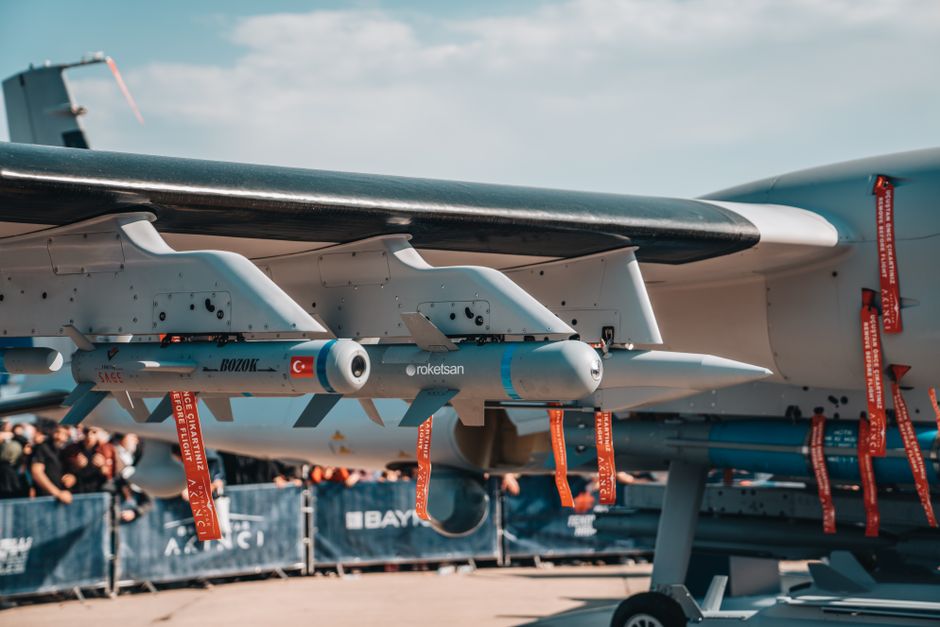
Across the globe, nations continue to invest heavily in advanced missile systems, forming the backbone of their defense strategies and projecting their military might. These sophisticated weapons, ranging from intercontinental ballistic missiles capable of striking targets across continents to precision-guided tactical systems, play a critical role in modern geopolitics and national security. A recent compilation highlights a diverse array of these systems, showcasing the significant military capabilities of countries like the United States, Russia, India, Israel, Iran, and others.
Key points
- The global landscape of military technology is heavily influenced by the development and deployment of various missile systems, from strategic deterrents to tactical defense.
- Major powers like the United States and Russia maintain extensive arsenals of intercontinental ballistic missiles (ICBMs) and submarine-launched ballistic missiles (SLBMs), forming the core of their strategic deterrence.
- Emerging military powers such as India and Iran are actively developing and deploying a wide spectrum of missile capabilities, including ballistic, cruise, and air defense systems.
- Israel's advanced missile defense systems, like Iron Dome and Arrow, highlight a focus on protecting against various aerial threats, including rockets and ballistic missiles.
- The list includes a mix of offensive and defensive systems, underscoring the dual nature of missile technology in both power projection and national protection.
- Technological advancements continue to drive the evolution of these weapons, impacting global power balances and defense strategies.
What we know so far
The extensive list of missile systems reveals a snapshot of the current global military landscape, detailing specific weapons platforms and their associated countries. These systems represent a spectrum of capabilities, from long-range strategic weapons to shorter-range tactical and defensive armaments.
United States
The U.S. arsenal features a mix of strategic and advanced tactical missiles. Strategic capabilities include the LGM-30G Minuteman III, a land-based intercontinental ballistic missile (ICBM), and the Trident II D5, a submarine-launched ballistic missile (SLBM). For air defense and anti-ballistic missile (ABM) operations, the U.S. employs the Patriot PAC-3 MSE, THAAD (Terminal High Altitude Area Defense), SM-3 Block IIA, and SM-6, the latter being a versatile multi-mission missile. Offensive tactical systems include the long-range cruise missile Tomahawk Block V (and its predecessor BGM-109 Tomahawk Block IV), the air-launched cruise missile JASSM-ER (Joint Air-to-Surface Standoff Missile - Extended Range), and the advanced air-to-air missile AIM-120D AMRAAM.
Russia
Russia's strategic missile forces are represented by powerful ICBMs. These include the formidable RS-28 Sarmat (also known as "Satan II"), the RS-24 Yars, and the RT-2PM2 Topol-M, all designed to ensure strategic deterrence.
France
France's strategic nuclear deterrent primarily relies on its submarine fleet, equipped with SLBMs such as the M51.3.
India
India is developing a comprehensive missile program, featuring both strategic and tactical systems. Its ballistic missile family includes the long-range Agni-V (an ICBM), the medium-range Agni-P, and the submarine-launched K-4. Cruise missile capabilities are highlighted by the supersonic BrahMos and the indigenous subsonic Nirbhay. Tactical and air defense systems include the Pralay (tactical ballistic missile), Akash-NG (next-generation surface-to-air missile), MR-SAM (Medium Range Surface-to-Air Missile), the air-to-air missile Astra Mk2, and the anti-radiation missile Rudram-1.
North Korea
North Korea continues to advance its long-range ballistic missile capabilities, with the Hwasong-17 representing one of its newest and largest ICBMs.
China
China's naval strategic forces are equipped with SLBMs like the Julang-2, contributing to its sea-based nuclear deterrent.
Israel
Israel possesses a sophisticated array of defensive and offensive missile systems. Its renowned air and missile defense capabilities include the Iron Dome Tamir interceptor (for short-range rockets), David's Sling Stunner (for medium- to long-range rockets and cruise missiles), and the advanced anti-ballistic missile systems Arrow 2 and Arrow 3. For offensive capabilities, Israel has the strategic Jericho III ICBM, the tactical ballistic missile LORA, the cruise missile Delilah, the air-launched cruise missile Popeye Turbo ALCM, and precision-guided munitions like Spike NLOS. Its air force also utilizes air-to-air missiles such as Python 5 and Derby.
Iran
Iran has significantly expanded its missile arsenal, focusing on ballistic and cruise missile development. Its ballistic missile inventory includes the Shahab-3, Emad, Sejjil-2, and Kheibar Shekan, primarily in the medium-range category. The Fattah-1 is reported to be a hypersonic ballistic missile. Cruise missile development features the Soumar and Paveh, alongside anti-ship variants like Noor and the anti-ship ballistic missile Khalij Fars. Iran also fields indigenously developed air defense systems like Bavar-373 and loitering munitions such as the Shahed-136.
Context and background
Missile systems are fundamental to modern military doctrine, serving both as instruments of deterrence and tools for power projection. Their development has been a continuous arms race since the mid-20th century, pushing technological boundaries and reshaping geopolitical strategies.
Types of Missile Systems
Missiles can be broadly categorized based on their trajectory, range, and target. Ballistic missiles follow a high, arcing trajectory, often leaving the atmosphere before re-entering to strike a target. They can be short-range, medium-range (MRBM), intermediate-range (IRBM), or intercontinental (ICBM). Cruise missiles, on the other hand, fly at lower altitudes, often hugging the terrain, and are typically guided throughout their flight path. They can be air-launched (ALCM), sea-launched (SLCM), or ground-launched.
Beyond these, specialized missiles include:
- Surface-to-Air Missiles (SAMs): Designed to intercept aircraft or other missiles.
- Air-to-Air Missiles (AAMs): Used by fighter jets to engage aerial targets.
- Anti-Ship Missiles (ASMs): Target surface vessels.
- Anti-Tank Guided Missiles (ATGMs): Precision weapons against armored vehicles.
- Anti-Ballistic Missiles (ABMs): Specifically designed to intercept incoming ballistic missiles.
Strategic Deterrence and Proliferation
ICBMs and SLBMs are central to the concept of nuclear deterrence, where the threat of massive retaliation prevents a first strike. Nations possessing these capabilities, often referred to as nuclear powers, aim to maintain a credible second-strike capability to ensure their security. However, the proliferation of missile technology, particularly to non-state actors or regions of high tension, poses significant challenges to global stability. The development of advanced missile systems by countries like Iran and North Korea, for instance, often raises international concerns and leads to diplomatic efforts aimed at curbing such advancements.
Missile Defense Systems
In response to offensive missile threats, countries have invested heavily in missile defense systems. These range from short-range systems like Israel's Iron Dome, designed to intercept rockets and artillery shells, to sophisticated multi-layered systems like the U.S. Patriot, THAAD, and SM-3, which can intercept ballistic missiles at various stages of their flight. Such defenses are crucial for protecting populations, critical infrastructure, and military assets from aerial attacks.
What happens next
The continuous evolution of missile technology underscores an ongoing global arms race. Nations will likely continue to invest in research and development to enhance the speed, range, accuracy, and evasiveness of their offensive missiles, while simultaneously bolstering their defensive capabilities. This dynamic interplay between offensive and defensive systems will remain a critical factor in international relations and strategic planning. Monitoring these developments is essential for understanding shifts in global power balances and for informing international security dialogues aimed at promoting stability and preventing escalation.
FAQ
- What is the primary difference between a ballistic missile and a cruise missile?
Ballistic missiles follow a parabolic trajectory, often leaving the atmosphere before re-entering, and are typically unpowered for much of their flight. Cruise missiles, by contrast, are powered throughout their flight, fly at lower altitudes, and are guided to their target, much like an unmanned aircraft. - Why are some missile systems referred to as "strategic"?
Strategic missile systems, particularly ICBMs and SLBMs, are designed for long-range attacks, often carrying nuclear warheads. Their primary role is strategic deterrence, threatening massive retaliation against an adversary's homeland to prevent a first strike. - What is the purpose of missile defense systems like Iron Dome or THAAD?
Missile defense systems are designed to intercept and destroy incoming hostile missiles or rockets. Systems like Iron Dome protect against short-range threats, while THAAD and Arrow systems are built to intercept ballistic missiles at higher altitudes, safeguarding cities and military assets. - Which countries are considered leaders in missile technology?
The United States and Russia are traditionally considered leaders due to their vast and sophisticated nuclear arsenals and advanced conventional missile capabilities. China is rapidly catching up, and countries like India, Israel, and France also possess highly advanced and specialized missile technologies. - Are drones considered missiles?
While some drones, particularly loitering munitions (like the Shahed-136), perform similar functions to missiles by delivering explosives to a target, they are generally classified differently. Drones are unmanned aerial vehicles (UAVs) that can be remotely controlled or fly autonomously, often capable of reconnaissance before striking, whereas missiles are typically single-use, self-propelled projectiles.