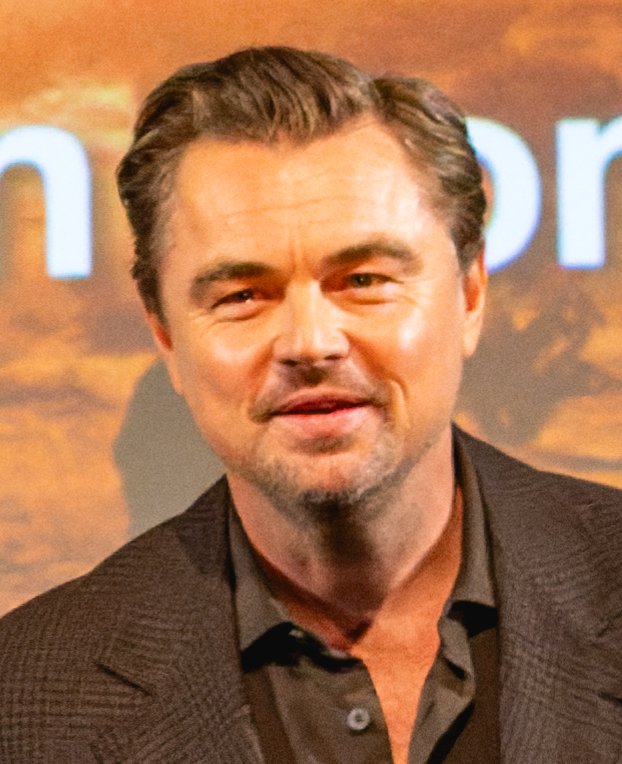
Leonardo DiCaprio

Leonardo DiCaprio

Actor and film producer

Explore Leonardo DiCaprio's biography, career highlights, notable work and connected film and television credits.

Photo: Raph_PH / CC BY 4.0
Career overview

About Leonardo DiCaprio

Leonardo DiCaprio is an American actor and producer known for building a film career around ambitious directors, demanding lead roles and projects designed for theatrical audiences. He moved from television and youth-oriented films to international fame with Titanic, then deliberately pursued varied work in crime, biography, science fiction, historical drama and dark comedy. His recurring collaborations with Martin Scorsese form an important part of modern American cinema. This profile follows that development and explains why his performances often combine movie-star presence with characters under intense psychological pressure.

Known for: Titanic, Inception, The Departed, The Wolf of Wall Street and The Revenant

Biography

Leonardo Wilhelm DiCaprio ( ; Italian: [diˈkaːprjo]; born November 11, 1974) is an American actor and film producer. Known for his work in biographical and period films, he is the recipient of numerous accolades, including an Academy Award, an Actor Award, a BAFTA Award, an Emmy Award, a Silver Bear and three Golden Globes. His films as a leading actor have grossed $7 billion worldwide, and he has been placed eight times in annual rankings of the world's highest-paid actors.

Born in Los Angeles, DiCaprio began his career in the late 1980s by appearing in television commercials. He had a recurring role in the sitcom Parenthood (1990–1991), and had his first major film part as author Tobias Wolff in This Boy's Life (1993). He received critical acclaim and his first Academy Award nomination for playing a developmentally disabled boy in What's Eating Gilbert Grape (1993). DiCaprio achieved international stardom with the star-crossed romances Romeo + Juliet (1996) and Titanic (1997). After the latter became the highest-grossing film in the world at the time, he reduced his workload for a few years. In an attempt to shed his image of a romantic hero, DiCaprio sought roles in other genres, including the 2002 crime dramas Catch Me If You Can and Gangs of New York; the latter marked the first of his many successful collaborations with director Martin Scorsese.

DiCaprio continued to gain acclaim for his performances in the biopic The Aviator (2004), the political thriller Blood Diamond (2006), the crime thriller The Departed (2006), and the romantic drama Revolutionary Road (2008).

🎬 Filmography

In-depth guide

Early recognition and the impact of Titanic

DiCaprio worked in television before receiving major film attention for This Boy's Life and What's Eating Gilbert Grape. The latter brought an Academy Award nomination for supporting actor while he was still a teenager and showed an early willingness to take emotionally difficult material seriously. Romeo + Juliet used his youthful screen presence in a highly stylised adaptation, but Titanic changed the scale of his career. James Cameron's historical romance became a global event and made DiCaprio one of the most recognisable actors of his generation. That success could have led to a narrow run of romantic leads. Instead, he used the following years to work in different tones, including The Beach, Catch Me If You Can and Gangs of New York. The choices established a pattern: large productions would be balanced by complicated characters, period settings and collaborations with filmmakers who had strong personal styles.

Verified Jul 16, 2026

Collaborations, risk and performance style

The partnership with Martin Scorsese has allowed DiCaprio to explore ambition, guilt, corruption and self-deception from several angles. The Aviator presents public confidence alongside private compulsion. The Departed turns identity into a source of constant pressure. Shutter Island depends on emotional instability and uncertain perception, while The Wolf of Wall Street uses speed, comedy and excess to expose a destructive appetite for status. Outside those films, Inception asks him to anchor a complex science-fiction structure with grief, and The Revenant reduces dialogue while making physical endurance central to the performance. DiCaprio often plays men attempting to control a situation that is already escaping them. His most effective scenes allow charisma and anxiety to exist together. This makes him suited to films that need a familiar star at the centre while still asking audiences to question the character's judgment, honesty or moral choices.

Verified Jul 16, 2026

Producing and choosing large-scale stories

DiCaprio is also a producer through Appian Way. His production interests include narrative films and documentaries, with environmental subjects forming a visible part of his public work. Producing gives him another route to support material beyond the roles he accepts as an actor. His starring filmography has remained selective compared with performers who release several projects every year. That selectivity helps each new role attract attention, but it also reflects the time needed for directors such as Scorsese, Christopher Nolan, Quentin Tarantino and Alejandro G. Inarritu to make complex films. His Academy Award for The Revenant followed earlier nominations and became recognition for a career already associated with many prominent productions. Viewers beginning with his work can compare the youthful directness of What's Eating Gilbert Grape, the romantic scale of Titanic, the moral tension of The Departed, the structure of Inception and the physical commitment of The Revenant.

Verified Jul 16, 2026

A practical viewing path

A short introduction to DiCaprio's career can begin with Titanic because it explains his global fame, then move to Catch Me If You Can for a lighter example of his leading work. The Departed and The Wolf of Wall Street demonstrate two very different Scorsese collaborations. Inception shows how he functions inside an effects-driven original blockbuster, while The Revenant highlights a performance built around landscape, physical hardship and limited speech. Once Upon a Time in Hollywood offers a more openly comic study of insecurity within the film industry. CineVault's connected titles reflect the records already imported into the site and will expand over time. They should be used as navigation rather than as a claim of a complete filmography.

Verified Jul 16, 2026

Frequently asked questions

Which film made Leonardo DiCaprio internationally famous?

Titanic made him a global star, although he had already earned strong reviews and an Academy Award nomination for What's Eating Gilbert Grape.

For which film did Leonardo DiCaprio win his first acting Oscar?

He won the Academy Award for Best Actor for The Revenant.

Which director has collaborated with Leonardo DiCaprio repeatedly?

Martin Scorsese has directed him in several films, including Gangs of New York, The Aviator, The Departed, Shutter Island and The Wolf of Wall Street.

Follow the filmography

Continue exploring Leonardo DiCaprio

Use verified credits and connected titles to understand the career without relying on biography text alone.

Movie library

Browse films and open connected cast and crew records.

Browse movies

Series library

Explore television profiles, seasons and episodes.

Browse series

Source transparency

Biography sources and licenses appear on this page when they have been recorded.