
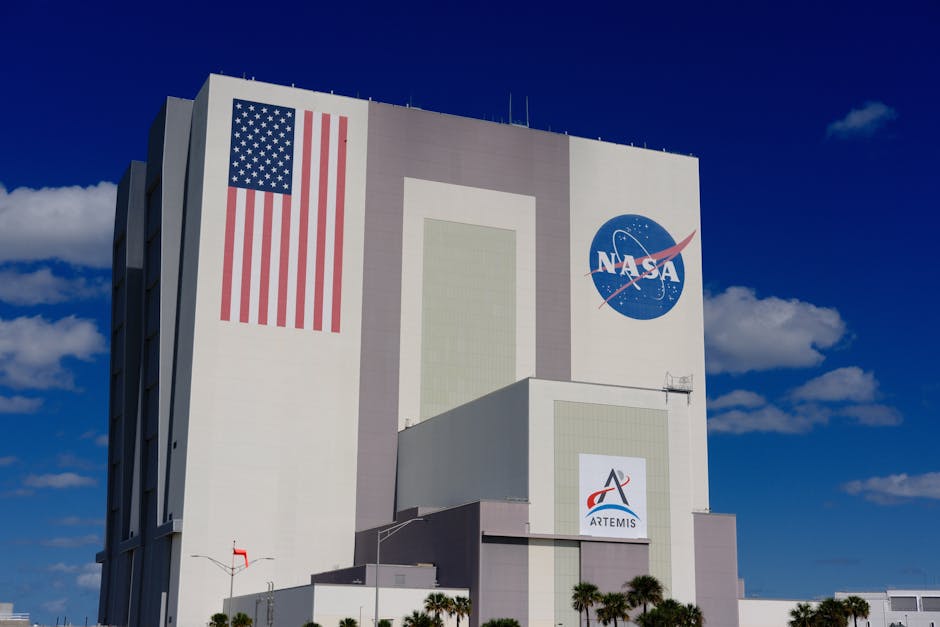
The highly anticipated Artemis II mission, marking a pivotal step in NASA's ambitious program to return humanity to the Moon, is poised to send a four-member astronaut crew on a historic journey around Earth's natural satellite. This crucial test flight, which precedes a planned lunar landing, promises the astronauts an extraordinary array of cosmic phenomena, including periods of radio silence as they pass behind the Moon, a rare solar eclipse viewed from deep space, and the iconic "Earthrise" spectacle, reminiscent of the Apollo era. This mission is designed to validate the Orion spacecraft's systems with humans aboard and prepare for future lunar exploration.
Key points
- Artemis II is the first crewed mission of the Artemis program, following the successful uncrewed Artemis I flight.
- A four-member astronaut crew will undertake a lunar flyby, circling the Moon without landing on its surface.
- During their journey, the crew is expected to experience moments of radio silence as the Moon obstructs communications with Earth.
- They will witness a unique solar eclipse, where the Earth itself passes in front of the Sun from their distant vantage point.
- The mission will also offer a breathtaking "Earthrise," a view of our home planet emerging from behind the lunar horizon.
- The primary objective is to test the Orion spacecraft’s life support, navigation, and communication systems with humans in deep space, paving the way for future lunar landings.
What we know so far
The Artemis II mission is confirmed to carry a four-member crew on a trajectory that will take them around the Moon. During this lunar flyby, the astronauts are expected to encounter several distinct environmental and visual events. Foremost among these is a period of radio silence, which will occur when the Orion spacecraft passes behind the Moon, temporarily severing direct communication links with mission control on Earth. Furthermore, the crew will have the unique opportunity to observe a solar eclipse, not from Earth's surface, but from space, with Earth itself positioned to obscure the Sun from their perspective. Another anticipated sight is the powerful visual of an "Earthrise," where our planet appears to ascend above the lunar limb, a phenomenon famously captured during earlier lunar missions.
Context and background
The Artemis program represents NASA's ambitious initiative to re-establish a human presence on the Moon, not just for fleeting visits, but with the long-term goal of sustainable lunar exploration and, ultimately, preparing for human missions to Mars. Named after the twin sister of Apollo in Greek mythology, the program builds upon the legacy of the Apollo missions of the 20th century, aiming to go further and stay longer.
The journey to Artemis II began with the successful launch of Artemis I in late 2022. This uncrewed test flight saw the powerful Space Launch System (SLS) rocket propel the Orion spacecraft on a 25-day mission around the Moon and back. Artemis I successfully demonstrated the capabilities of both the SLS and Orion, proving key systems like heat shield performance, navigation, and propulsion in a deep-space environment without the risks associated with a human crew.
Artemis II is the critical next step. While it will not land on the Moon, this crewed flyby mission is designed to push the boundaries of human deep-space travel. The primary objectives include rigorously testing Orion's life support systems, communication capabilities, and navigation accuracy with astronauts onboard. This mission will validate whether the spacecraft can safely sustain a crew for an extended period beyond low-Earth orbit, expose them to the radiation environment of deep space, and confirm all procedures for a crewed lunar journey.
Unique Phenomena of the Mission
- Radio Silence: As the Orion spacecraft orbits the Moon, there will be periods when the lunar body itself blocks the direct line of sight to Earth. This creates moments of "radio silence," where communication with mission control is temporarily lost. For the crew, this signifies being truly isolated in deep space, relying on onboard systems and pre-programmed instructions. Historically, such moments have been part of lunar missions, requiring precise planning and robust autonomous capabilities.
- Solar Eclipse from Space: Unlike the solar eclipses observed from Earth, where the Moon passes between the Sun and our planet, the Artemis II crew will witness a different kind of eclipse. From their vantage point beyond the Moon, Earth will pass directly in front of the Sun, creating a spectacular and rare celestial alignment. This unique perspective offers not only an awe-inspiring visual but also potential opportunities for scientific observation of Earth's atmosphere silhouetted against the Sun.
- Earthrise: Perhaps one of the most iconic images from space exploration, an "Earthrise" occurs when the Earth appears to rise above the lunar horizon as seen from the Moon's surface or orbit. This phenomenon, famously captured by the Apollo 8 crew in 1968, provides a profound reminder of our planet's beauty and fragility when viewed against the stark, desolate lunar landscape. For the Artemis II astronauts, seeing Earth emerge from behind the Moon will be a powerful and moving experience, connecting them to a long legacy of human spaceflight.
This mission is more than just a sightseeing trip; it's a vital dress rehearsal. Every system, every procedure, and every human factor will be scrutinized to ensure the safety and success of subsequent missions, particularly Artemis III.
What happens next
The successful completion of the Artemis II mission is paramount for the progression of the entire Artemis program. Following this crewed flyby, the next major milestone will be Artemis III, which is planned to be the mission that finally lands humans back on the lunar surface. Artemis III aims to make history by placing the first woman and the first person of color on the Moon, expanding the legacy of lunar exploration.
Beyond Artemis III, NASA envisions a sustained human presence on the Moon. This includes the development of a lunar base camp and the Gateway, a small space station orbiting the Moon, which would serve as a staging point for lunar surface missions and potentially as an outpost for deeper space travel. These future missions will focus on scientific research, resource utilization, and developing technologies that will be crucial for the ultimate goal of sending humans to Mars. The exact timelines for these subsequent missions are subject to the successful completion and analysis of each preceding step, with safety and system readiness being the overriding priorities.
FAQ
- What is the primary goal of the Artemis II mission?
Artemis II's main goal is to test the Orion spacecraft's systems with a human crew in deep space, validating life support, communication, and navigation for future lunar landings. - How many astronauts are participating in Artemis II?
The mission will carry a four-member astronaut crew. - Will the Artemis II mission land on the Moon?
No, Artemis II is a lunar flyby mission; the crew will orbit the Moon but will not land on its surface. - What unique observations will the crew make during the mission?
The crew is expected to experience periods of radio silence, witness a solar eclipse where Earth blocks the Sun, and see an "Earthrise" from behind the Moon. - Why is Artemis II important for future space exploration?
It is a critical precursor to Artemis III, the mission planned to land humans on the Moon, and helps lay the groundwork for a sustainable lunar presence and eventual human missions to Mars.


