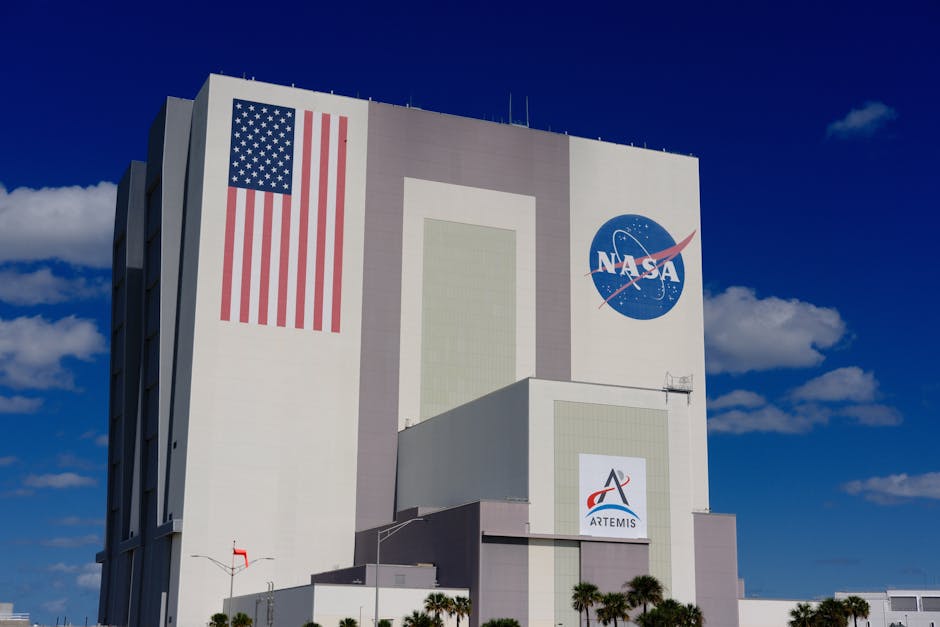

The U.S. National Aeronautics and Space Administration (NASA) is poised to navigate a challenging new era, facing substantial budget reductions while simultaneously being urged to accelerate its high-profile Artemis program aimed at returning humans to the Moon. A proposed federal budget for 2027 seeks to slash nearly a quarter of the agency's funding, bringing its total allocation down to approximately $18.8 billion. This financial adjustment, backed by the current administration and NASA Administrator Jared Isaacman, signals a strategic pivot within the space agency, rebalancing its long-held dual focus on scientific discovery and human exploration.
Key points
- Significant Funding Reduction: NASA faces a proposed budget cut of roughly 23-25%, reducing its overall funding to about $18.8 billion.
- Artemis Program Prioritized: Despite overall cuts, the flagship Artemis mission, focused on lunar return and establishing a sustained presence, remains largely protected and is even prioritized for acceleration.
- Science Budget Hit Hardest: NASA's science budget is expected to suffer the most significant impact, with nearly half of its funding at risk, potentially leading to canceled or scaled-back missions.
- Shift in Agency Focus: The proposed budget marks a decisive shift from a balanced approach of exploration and broad scientific research towards an emphasis on visible outcomes and human spaceflight milestones.
- Administration's Rationale: The cuts are framed as part of broader fiscal restraint, with the administration arguing NASA has an "execution problem" rather than a "funding problem," emphasizing efficiency and delivering results.
- Quieter Communication: The budget strategy has been communicated with less public fanfare than in previous years, reflecting a more internal, outcome-driven posture for the agency.
What we know so far
The proposed U.S. budget for 2027 intends to reduce NASA's overall funding by an estimated 23% to 25%, settling at around $18.8 billion. This reduction is not uniformly distributed across the agency's various programs. Critical human exploration initiatives, particularly those associated with the Artemis mission, are largely shielded from these cuts and are, in fact, being pushed for accelerated progress. The Artemis program's goals include returning humans to the Moon, establishing a long-term lunar presence, and laying the groundwork for future missions to Mars.
Conversely, NASA's science budget is slated to experience the most severe impact, with projections indicating a potential cut of nearly 50% of its funding. Space technology programs are also expected to see deep reductions, close to one-third of their current allocations. This allocation strategy suggests a clear prioritization of human spaceflight milestones over a broader portfolio of scientific research and technological development. NASA Administrator Jared Isaacman has publicly supported this proposal, stating that the agency's challenge lies in execution rather than a lack of financial resources, advocating for a focus on delivering results using existing appropriations and supplemental funding.
Context and background
For decades, NASA has maintained a delicate balance between two fundamental objectives: inspiring human exploration and advancing scientific knowledge. Exploration, often characterized by ambitious missions like the Apollo program or the Artemis initiative, captures public imagination and projects geopolitical prestige. Science, through robotic probes, telescopes, and Earth observation satellites, systematically builds our understanding of the universe, our solar system, and our home planet. This proposed budget represents a significant departure from that historical equilibrium, decisively favoring human exploration endeavors, particularly the Artemis program, at the expense of many scientific missions.
The administration's rationale for these cuts is rooted in a broader push for fiscal restraint and increased efficiency across federal agencies. The argument put forth is that NASA already possesses substantial resources from previous appropriations and additional funding, and therefore, the current focus should be on demonstrating tangible outcomes rather than expanding spending. This perspective prioritizes visible achievements, such as landing humans on the Moon and constructing a lunar base, over the maintenance of a diverse range of scientific programs, some of which may have longer timelines for discovery or less immediate public visibility.
The Artemis program itself is a cornerstone of this new strategy. Its ambitious objectives include not only returning astronauts to the lunar surface but also establishing a sustainable human presence there, envisioned as a stepping stone for future deep-space missions, including eventual human travel to Mars. Supporters believe that concentrating investment in Artemis will yield concrete results, foster technological innovation, and unlock new scientific opportunities derived from sustained lunar operations and infrastructure. However, critics express concern that this hyper-focus risks diminishing NASA's broader scientific agenda, potentially leading to a reduction in crucial data, slower progress in planetary science, and an erosion of the agency's long-standing leadership in global space research.
Furthermore, this budget shift occurs within a rapidly evolving global space landscape. International competition is intensifying, with nations like China actively pursuing their own ambitious lunar exploration programs. The private sector, through companies like SpaceX and Blue Origin, is increasingly reshaping the economics and capabilities of spaceflight, introducing new dynamics to launch services and space infrastructure. In this environment, decisions regarding NASA's funding allocation are not merely domestic policy matters; they are strategic choices that will determine the United States' position and influence in the burgeoning new space race. The quieter communication strategy surrounding these budget changes also reflects a subtle shift in NASA's public posture, moving from a more openly communicative scientific institution to one more focused on internal management and mission delivery.
What happens next
As the proposed budget moves forward, several key developments are expected. The Artemis program will likely see accelerated efforts, with a strong emphasis on meeting its ambitious timelines for lunar missions and infrastructure development. We can anticipate continued focus on key milestones for the Orion spacecraft and the Space Launch System (SLS), which are central to the program. Conversely, many scientific missions, particularly those in their early planning stages or those with extended operational timelines, face an uncertain future. It is probable that some will be canceled, while others will experience significant scaling back or delays, directly impacting data collection and scientific discovery in various fields, from astrophysics to Earth science.
The internal structure and priorities of NASA are expected to continue evolving to align with this new, more outcome-driven mandate. The agency will likely emphasize efficiency and internal accountability, seeking to deliver on its exploration goals within tighter financial constraints. Observers will be watching to see how NASA balances its commitments to international partners on scientific missions that might be affected by the cuts. The long-term implications for the U.S.'s standing in global scientific research and its ability to attract top scientific talent will also be a critical area to monitor as these changes take effect.
FAQ
- Q: How much is NASA's budget being cut?
A: The proposed 2027 budget suggests a cut of approximately 23-25% from NASA's overall funding, bringing it down to about $18.8 billion. - Q: Which NASA programs are most affected by the cuts?
A: NASA's science budget is expected to be hit hardest, potentially losing nearly half of its funding, along with significant cuts to space technology programs. - Q: Is the Artemis Moon mission also being cut?
A: No, the Artemis program, focused on returning humans to the Moon, is largely protected from the cuts and is, in fact, being prioritized for acceleration. - Q: Why is the administration proposing these cuts?
A: The cuts are part of a broader push for fiscal restraint across government agencies, with the administration arguing NASA has an "execution problem" rather than a "funding problem," emphasizing efficiency and delivering results. - Q: What are the potential long-term consequences of these budget changes?
A: While human exploration may accelerate, the long-term consequences could include reduced scientific data, slower progress in understanding planetary systems, and a diminished leadership role for the U.S. in global space research.