
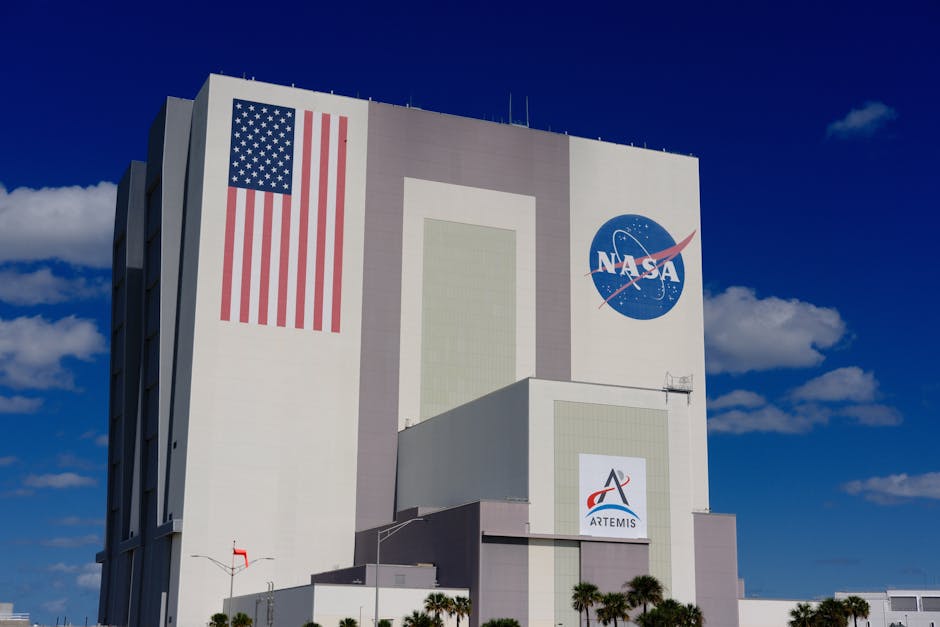
As the Artemis II mission prepares to embark on its historic journey around the Moon, a key aspect of its scientific approach will involve the crew's direct visual observation of the lunar surface. Astronauts aboard the spacecraft are expected to rely primarily on their own eyes to study the Moon's features, a method described by some as leveraging "the best camera to ever exist." This emphasis on human perception underscores the unique value of real-time, in-situ analysis during space exploration, setting the stage for future lunar landings and sustained presence.
Key points
- The Artemis II crew will primarily use their natural vision to observe and study the Moon's surface during their flyby mission.
- This approach highlights the irreplaceable value of human perception, adaptability, and pattern recognition in scientific exploration, complementing advanced instrumentation.
- Artemis II is a crewed test flight, orbiting the Moon without landing, designed to validate spacecraft systems and life support ahead of future lunar landings.
- It marks a critical step in NASA's broader Artemis program, which aims to return humans to the Moon for the first time in over 50 years.
- The mission serves as a precursor to Artemis III, which intends to land astronauts on the lunar south pole, making the observations from Artemis II crucial for site selection and understanding the lunar environment.
What we know so far
The central fact confirmed about the Artemis II mission's observational strategy is that its crew will dedicate a significant portion of their efforts to studying the Moon's surface predominantly through direct visual inspection. This means astronauts will actively use their eyes, rather than relying solely on automated cameras or remote sensors, to gather information about lunar topography, geological features, and potential areas of interest. The rationale behind this approach is rooted in the unparalleled capabilities of the human brain for real-time analysis, anomaly detection, and contextual understanding that even the most sophisticated cameras cannot fully replicate. While high-resolution cameras and scientific instruments will undoubtedly be aboard, the emphasis placed on direct human observation suggests a recognition of its unique contribution to scientific discovery in dynamic space environments.
Context and background
The Artemis program represents a monumental undertaking by NASA, aiming not just to return humans to the Moon, but to establish a sustainable presence there as a stepping stone for future missions to Mars. Named after the twin sister of Apollo in Greek mythology, the program builds upon the legacy of the Apollo era while incorporating cutting-edge technology and a more diverse astronaut corps, including the first woman and first person of color to walk on the lunar surface.
The Artemis Program: A Stepped Approach
The program is structured in phases:
- Artemis I: An uncrewed test flight that successfully orbited the Moon in late 2022, validating the Space Launch System (SLS) rocket and the Orion spacecraft's performance in deep space.
- Artemis II: The upcoming crewed test flight, which will carry astronauts around the Moon and back, further testing Orion's systems with humans aboard.
- Artemis III: The mission planned to land astronauts on the lunar south pole, utilizing a Human Landing System (HLS) to descend to the surface.
Artemis II: A Critical Precursor
Artemis II is more than just a joyride around the Moon; it's an indispensable validation mission. Its primary objectives include testing Orion's life support systems, communication capabilities, and navigation in a deep-space environment with a human crew. The four-person crew will spend approximately 10 days in space, including a lunar flyby that will take them further from Earth than any human has traveled before. While no lunar landing is planned for this mission, the data and observations collected by the crew are crucial for informing subsequent missions, particularly Artemis III, which aims for a landing at the Moon's resource-rich south pole.
The Enduring Value of Human Observation in Space
In an age of advanced robotics and artificial intelligence, the decision to prioritize human visual observation might seem counterintuitive. However, the human eye and brain possess capabilities that remain unmatched by even the most sophisticated sensors:
- Pattern Recognition and Anomaly Detection: Astronauts can quickly identify unusual geological formations, subtle color variations, or unexpected phenomena that automated systems might overlook or misinterpret.
- Real-time Decision Making: The ability to analyze a scene and make immediate decisions about what to focus on, what data to collect, or where to direct further attention is invaluable in dynamic environments.
- Contextual Understanding: Humans can integrate various sensory inputs and prior knowledge to build a holistic understanding of a landscape, discerning relationships between features that might not be obvious to a programmed sensor.
- Flexibility and Adaptability: Instruments are designed for specific tasks; humans can adapt their observational strategy on the fly, responding to new discoveries or unexpected challenges.
- Qualitative Data: Beyond quantitative measurements, human description and interpretation provide rich qualitative data that adds depth to scientific understanding.
This approach echoes the spirit of the Apollo missions, where astronauts' detailed descriptions and photographs, often taken with simple handheld cameras, provided critical insights that complemented the scientific instrumentation. The insights gained from the Artemis II crew's direct observations will be vital for selecting future landing sites, identifying potential hazards, and understanding the lunar environment in ways that only human presence can facilitate.
What happens next
Following the successful completion of the Artemis II mission, the focus will shift towards preparations for Artemis III. This mission, currently planned for a future launch window, aims to achieve the first human lunar landing since Apollo 17 in 1972. The data, experiences, and observations gathered by the Artemis II crew will be meticulously analyzed to refine mission plans, spacecraft systems, and astronaut training protocols for Artemis III. In the longer term, the Artemis program envisions a sustained human presence on and around the Moon, supported by the Gateway lunar orbital outpost and eventually leading to crewed missions to Mars. The insights from direct human observation on Artemis II will directly contribute to laying the groundwork for these ambitious future endeavors.
FAQ
- What is the primary goal of the Artemis II mission?
Artemis II is a crewed test flight designed to validate the Orion spacecraft's systems, life support, and capabilities in deep space with astronauts aboard, in preparation for future lunar landings. - Why are astronauts using their eyes primarily for observation?
The human eye and brain offer unique capabilities for real-time pattern recognition, anomaly detection, contextual understanding, and flexible decision-making that complement automated instruments, providing invaluable qualitative data. - Will Artemis II land on the Moon?
No, Artemis II is a lunar flyby mission. It will orbit the Moon but will not land on its surface. The first landing is planned for Artemis III. - When is Artemis II expected to launch?
The launch window for Artemis II is currently anticipated in late 2024 or early 2025, though specific dates are subject to ongoing testing and readiness reviews. - What is the broader objective of the Artemis program?
The Artemis program aims to return humans to the Moon, establish a sustainable lunar presence, and use the Moon as a proving ground for eventually sending astronauts to Mars.


