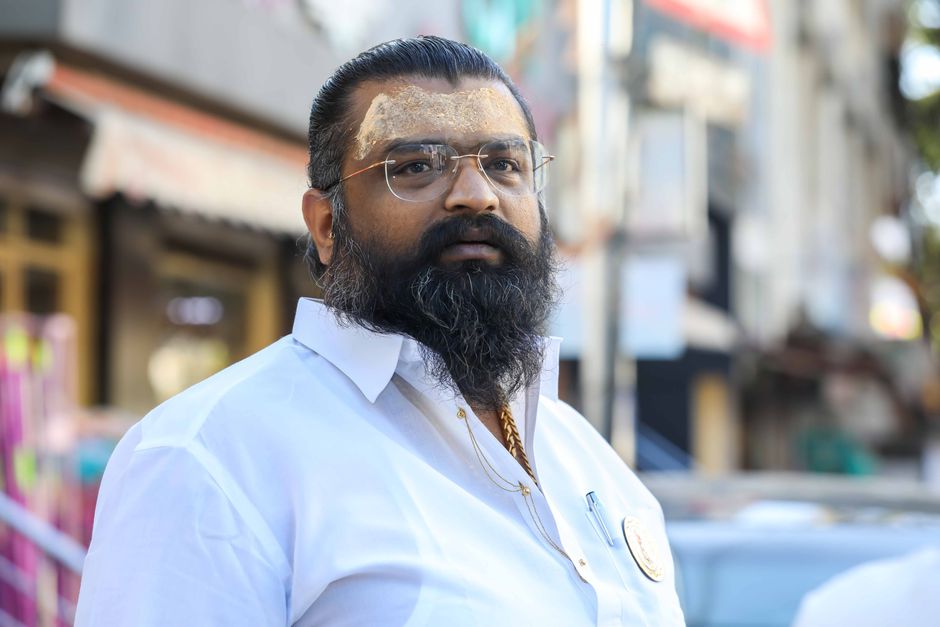

Dravida Munnetra Kazhagam (DMK) leader A Raja has initiated legal proceedings against a YouTube channel, alleging that a controversial audio clip circulating online, attributed to him, is a deceptive fabrication created using artificial intelligence (AI) and selective editing. The recording, which purportedly contains disparaging remarks about DMK leadership and sensitive party matters, has become a significant point of contention in Tamil Nadu's political landscape, particularly as the state prepares for the upcoming general elections.
Key points
- DMK leader A Raja has issued a legal notice to a YouTube channel regarding an audio clip attributed to him.
- Raja asserts that the audio recording is a sophisticated fabrication, created using artificial intelligence and manipulated through selective editing.
- The contested clip allegedly includes critical comments about Chief Minister M.K. Stalin's leadership and references to the sensitive 2G spectrum allocation case.
- AIADMK General Secretary Edappadi K. Palaniswami has utilized the unverified clip to make accusations against the late DMK patriarch M. Karunanidhi and current Chief Minister M.K. Stalin.
- Raja has publicly condemned Palaniswami's actions as "politically uncivilised and dishonest," highlighting the ethical concerns around using unverified content for political gain.
- This controversy unfolds amidst a heightened political climate in Tamil Nadu, with the state scheduled to participate in elections soon.
What we know so far
DMK leader A Raja confirmed that he has sent a legal notice to a specific YouTube channel concerning an audio clip that has been widely circulated. According to Raja, this recording is not genuine but rather an AI-generated fabrication, meticulously edited to misrepresent his words and create a false narrative. He explicitly stated, "The audio clip circulated as if I spoke. It has been cut, pasted, and created using artificial intelligence to falsely fabricate a narrative."
The content of the disputed audio clip is alleged to contain remarks critical of the DMK's current leadership, specifically suggesting that Tamil Nadu Chief Minister M.K. Stalin is 'unfit' for his position. Furthermore, the clip reportedly touches upon the sensitive 2G spectrum scam, an issue that has historically been a point of contention involving Raja. Another significant claim within the audio is the allegation that former Chief Minister M. Karunanidhi was mistreated or held under house arrest during his final days.
The AIADMK, a rival political party, has seized upon this audio clip. Its general secretary, Edappadi K. Palaniswami, has publicly referenced the allegations within the clip, particularly the claims regarding M. Karunanidhi's treatment. Palaniswami has gone as far as to demand a fresh investigation into the former CM’s death, contingent on his party coming to power. Raja has strongly criticized Palaniswami's use of this unverified material, labelling his actions as "politically uncivilised and dishonest," and accusing him of leveraging fabricated content for political advantage against both Karunanidhi and Stalin.
Context and background
The dispute surrounding the alleged AI-fabricated audio clip highlights a growing challenge in modern political discourse: the proliferation of deepfakes and synthetic media. As artificial intelligence technology becomes more sophisticated and accessible, the ability to generate convincing but entirely false audio and video content has increased dramatically. Such technology poses a significant threat to truth and trust, especially in sensitive environments like political campaigns.
Tamil Nadu has a vibrant and often fiercely competitive political landscape, primarily dominated by two Dravidian parties: the DMK and the AIADMK. The rivalry between these two political giants is deeply entrenched, marked by decades of power struggles, ideological differences, and personal animosities. M. Karunanidhi, the late DMK patriarch, was a towering figure in Indian politics, and his legacy continues to be a powerful symbol for the party, now led by his son, M.K. Stalin. Any allegations concerning Karunanidhi's final days or Stalin's leadership are therefore highly charged and immediately become focal points of political debate.
The mention of the 2G spectrum scam in the alleged audio clip is particularly noteworthy. A. Raja, a prominent DMK leader, was a central figure in the highly publicized 2G spectrum allocation case. While he was later acquitted, the scam remains a sensitive topic that political opponents often invoke to discredit him or the DMK. The timing of this controversy is also crucial, as Tamil Nadu is currently gearing up for elections, with polling scheduled for April 23 and vote counting on May 4. In the run-up to elections, political parties often intensify their attacks on rivals, and the spread of potentially damaging information, whether true or false, can have a significant impact on public perception and electoral outcomes.
The use of AI to create misleading content introduces a new layer of complexity to these political battles, making it harder for the public to discern fact from fiction and eroding trust in traditional media and political statements. This incident underscores the urgent need for robust verification mechanisms and a critical approach to information consumed online, especially during election periods.
What happens next
Following the issuance of a legal notice, several developments are likely to unfold. The YouTube channel in question will now be formally required to respond to A Raja's allegations, which typically includes a demand for the removal of the contentious audio clip, a public apology, and potentially compensation for damages. The channel may choose to comply, challenge the notice, or ignore it, leading to further legal action.
Politically, this incident is expected to fuel continued exchanges between the DMK and AIADMK. The DMK will likely use Raja's legal action to highlight what they perceive as dishonest tactics by their opponents and the misuse of technology to spread misinformation. Conversely, the AIADMK may attempt to double down on the allegations contained in the clip, or pivot to questioning the DMK's transparency, depending on their strategy.
Given the proximity to elections, there is also a possibility that the DMK or other concerned parties might lodge a formal complaint with the Election Commission of India (ECI). The ECI has a mandate to ensure free and fair elections and often intervenes in cases of misinformation or unethical campaign practices. Such a complaint could lead to an investigation by the ECI into the origins and circulation of the audio clip, potentially issuing directives to media platforms or political parties.
The legal process itself could be protracted, involving investigations into the technical aspects of the audio clip's fabrication, expert testimony on AI manipulation, and potential court proceedings for defamation. Public discourse and media scrutiny around deepfakes and AI-generated content in politics are also expected to intensify, prompting broader discussions about regulatory frameworks and digital ethics in India.
FAQ
- What is A Raja's main accusation regarding the audio clip?
A Raja asserts that the audio clip attributed to him is a fabrication created using artificial intelligence and selective editing, designed to misrepresent his speech and create a false narrative. - What sensitive topics are allegedly discussed in the controversial audio clip?
The clip purportedly contains disparaging remarks about Chief Minister M.K. Stalin's leadership, claims related to the 2G spectrum scam, and allegations about the mistreatment of late DMK patriarch M. Karunanidhi during his final days. - How has the AIADMK reacted to the audio clip?
AIADMK General Secretary Edappadi K. Palaniswami has used the unverified clip to make accusations against the DMK leadership, specifically citing the claims about M. Karunanidhi's treatment to demand a fresh probe into his death if AIADMK comes to power. - Why is "AI fabrication" a significant concern in this context?
The use of AI to create deepfakes and manipulated content poses a serious threat to democratic processes, as it can spread misinformation, erode public trust, and unfairly influence voter perception during crucial election periods. - When are the relevant elections in Tamil Nadu?
Tamil Nadu is scheduled to go to polls in a single phase on April 23, with the counting of votes set for May 4, making the current political controversy particularly impactful.