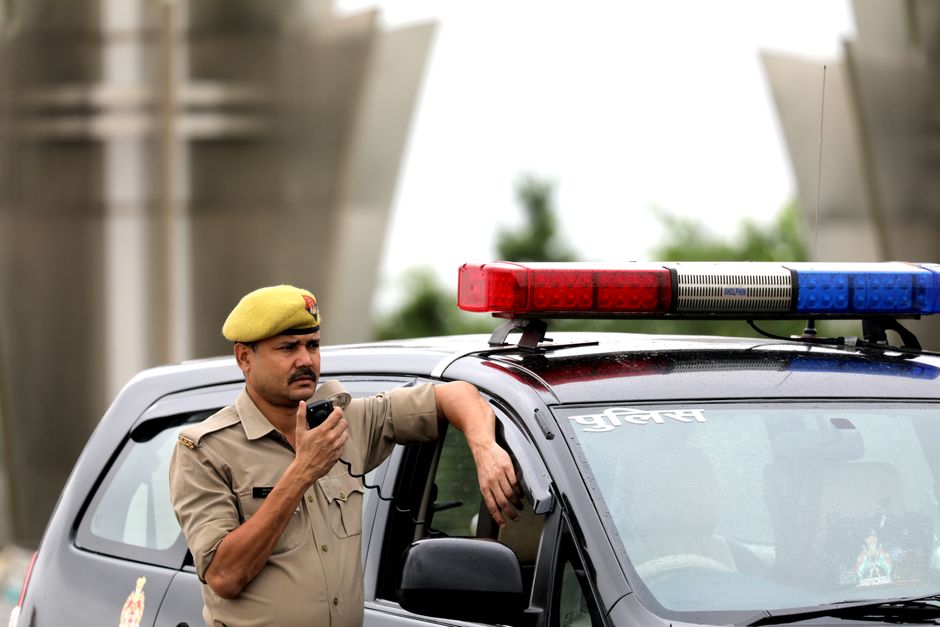

In a landmark verdict delivered on Monday, a Madurai court has sentenced nine police personnel to death for the brutal custodial murders of P Jeyaraj and his son J Beniks in Sathankulam, Tuticorin district, back in June 2020. The father-son duo were arrested for allegedly violating Covid-19 lockdown regulations by keeping their shop open beyond the permitted hours, leading to an incident of severe assault that ultimately claimed their lives while in police custody.
Key points
- Nine police officers received death sentences from a Madurai court for the custodial murders.
- Victims P Jeyaraj and his son J Beniks died in June 2020 due to brutal torture while in police custody.
- The arrests stemmed from a minor alleged violation of Covid-19 lockdown rules regarding shop operating hours.
- The Madurai First Additional District and Sessions Court delivered the capital punishment verdict.
- The case garnered significant public outrage, prompting intervention from the Madras High Court and a CBI investigation.
- A tenth suspect, also a police officer, passed away from Covid-19 during the course of the investigation.
What we know so far
The Madurai First Additional District and Sessions Court, presided over by Judge G Muthukumaran, on Monday, awarded capital punishment to nine police officers involved in the Sathankulam custodial deaths case. The court had previously found all nine police personnel guilty of the double-murder on March 23, nearly six years after the initial incident.
The convicted officers include former Inspector S Sridhar, Sub-Inspectors K Balakrishnan and P Raghu Ganesh, Head Constables S Murugan and A Samadurai, and Constables M Muthuraja, S Chelladurai, X Thomas Francis, and S Vailmuthu.
The tragic events unfolded when P Jeyaraj and his son J Beniks were taken into custody by Sathankulam police in Tuticorin district on the evening of June 19, 2020. Their arrest was reportedly for keeping their mobile accessories shop open past the stipulated deadline during the stringent Covid-19 induced lockdown measures then in effect.
During their detention, both Jeyaraj and Beniks were subjected to severe physical assault by the police officers. Following the brutal treatment, they were subsequently lodged in Kovilpatti sub-jail the next day. Beniks tragically succumbed to his injuries at Kovilpatti government hospital on June 22, 2020, followed by his father, Jeyaraj, who died on June 23, 2020.
The deaths triggered widespread public outcry and condemnation across the nation. In response, the Madras High Court took suo motu cognizance of the custodial deaths on June 24, 2020. The case was swiftly transferred to the Central Bureau of Investigation (CBI) by the High Court on June 29, 2020, to ensure an impartial probe.
During the initial inquiry, the Tuticorin principal district judge, who was closely monitoring the investigation, reported a lack of cooperation from police personnel at the Sathankulam station. This led the High Court to issue a directive for the Tuticorin district collector to deploy revenue officers to take control of the police station and collect relevant materials, ensuring evidence was secured.
The CBI filed its initial chargesheet against the nine policemen on September 25, 2020, and later submitted a supplementary chargesheet on August 12, 2022. It was also noted that a tenth suspect in the case, former Special Sub-Inspector Paldurai, who had also been arrested, passed away in August 2020 due to Covid-19.
Context and background
The Sathankulam custodial deaths case sent shockwaves across India, bringing into sharp focus the persistent and critical issue of police brutality and accountability within the country's law enforcement agencies. Custodial torture, defined as any act by which severe pain or suffering, whether physical or mental, is intentionally inflicted on a person for purposes such as obtaining information or a confession, is a grave violation of fundamental human rights and a criminal offense. Despite being a signatory to the UN Convention Against Torture, India has yet to ratify it, leading to ongoing debates about the urgent need for specific anti-torture legislation and stronger mechanisms for police accountability.
This particular incident unfolded during a period of unprecedented and stringent nationwide lockdown measures implemented to curb the spread of the Covid-19 pandemic. While essential services were permitted, strict timings were enforced for commercial establishments. The alleged violation by Jeyaraj and Beniks, though minor, tragically escalated into a fatal incident, underscoring the potential for misuse of power by authorities during times of crisis and emergency. The incident became a symbol of the heavy-handed approach sometimes adopted by law enforcement during the lockdown.
The swift and decisive intervention by the Madras High Court, which took suo motu cognizance – meaning it initiated legal proceedings on its own motion without a formal petition – was crucial in this case. This action demonstrated the judiciary's commitment to upholding justice and protecting citizens' rights, especially when state machinery is implicated in grave offenses. The High Court's decision to transfer the investigation to the Central Bureau of Investigation (CBI), India's premier investigative agency, further ensured an impartial probe, free from local influences that might compromise fairness. The CBI's involvement is often sought in high-profile or sensitive cases to guarantee independence and thoroughness, thereby bolstering public confidence in the investigative process.
The reported non-cooperation from local police personnel during the initial inquiry, as highlighted by the Tuticorin principal district judge, is a recurring challenge in cases involving alleged police misconduct. The High Court's directive to involve revenue officers to secure evidence was an extraordinary step, emphasizing the gravity of the situation and the imperative to prevent any destruction or manipulation of crucial evidence. This measure highlighted systemic issues within certain police departments and underscored the urgent need for transparency and cooperation with judicial inquiries to ensure justice is served.
The public outcry that followed the deaths of Jeyaraj and Beniks was immense, fueled by extensive media reports and social media campaigns. This widespread condemnation played a significant role in pressuring authorities to act swiftly and ensure justice. It brought national attention to the plight of victims of custodial violence and reignited discussions about comprehensive police reforms, improved training focused on human rights, and the importance of ethical policing practices across the country.
This judgment serves as a powerful deterrent and a testament to the principle that no one, regardless of their position or power, is above the law. It reinforces public trust in the judicial system's ability to hold even powerful state actors accountable for their actions, particularly in cases involving the ultimate abuse of power – custodial deaths. For the families of victims of custodial violence, this verdict offers a glimmer of hope that justice, though often delayed, can eventually be served through persistent legal pursuit.
What happens next
While the Madurai court has delivered a death sentence, this is not the final stage of the legal process in India. According to the country's judicial system, a death sentence must be confirmed by the respective High Court. Therefore, the convicted police personnel are fully expected to appeal this verdict to the Madras High Court.
Should the High Court uphold both the conviction and the death sentence, the defense has the option to further appeal to the Supreme Court of India, the highest judicial authority in the country. The entire appeals process can be lengthy and complex, often taking several years to reach a definitive conclusion.
Beyond the appeals to higher courts, there is also the possibility of a mercy petition to the President of India. This petition can be filed even after the Supreme Court confirms a death sentence. The President, acting on the advice of the Union Cabinet, possesses the constitutional power to grant pardon, commute, or remit the sentence. Legal experts anticipate a rigorous and prolonged battle through the higher courts as the defense lawyers for the convicted officers will undoubtedly exhaust all available legal avenues to challenge the verdict. This case will continue to be closely watched by human rights organizations, the legal fraternity, and the public, given its profound significance in addressing police accountability and curbing custodial violence in India. The ultimate outcome of the appeals will set important precedents regarding the enforcement of human rights within law enforcement agencies.
FAQ
- What is "custodial death"? Custodial death refers to the death of a person while they are in the custody of law enforcement agencies, often due to torture, negligence, or unlawful actions by officials.
- Why was the case transferred to the CBI? The case was transferred to the CBI by the Madras High Court to ensure an impartial and independent investigation, free from potential local police influence, especially given that police personnel were the accused.
- What does "suo motu cognizance" mean? "Suo motu cognizance" means that a court initiates legal proceedings on its own initiative, without any formal complaint or petition being filed by an external party, typically in cases of significant public interest or grave injustice.
- What was the initial charge against Jeyaraj and Beniks? They were initially taken into custody for allegedly keeping their shop open beyond the permitted hours during the Covid-19 lockdown, a minor violation that tragically escalated.
- Is the death sentence final? No, a death sentence in India is subject to confirmation by the High Court and can be challenged through appeals to the Supreme Court. A mercy petition to the President is also possible.