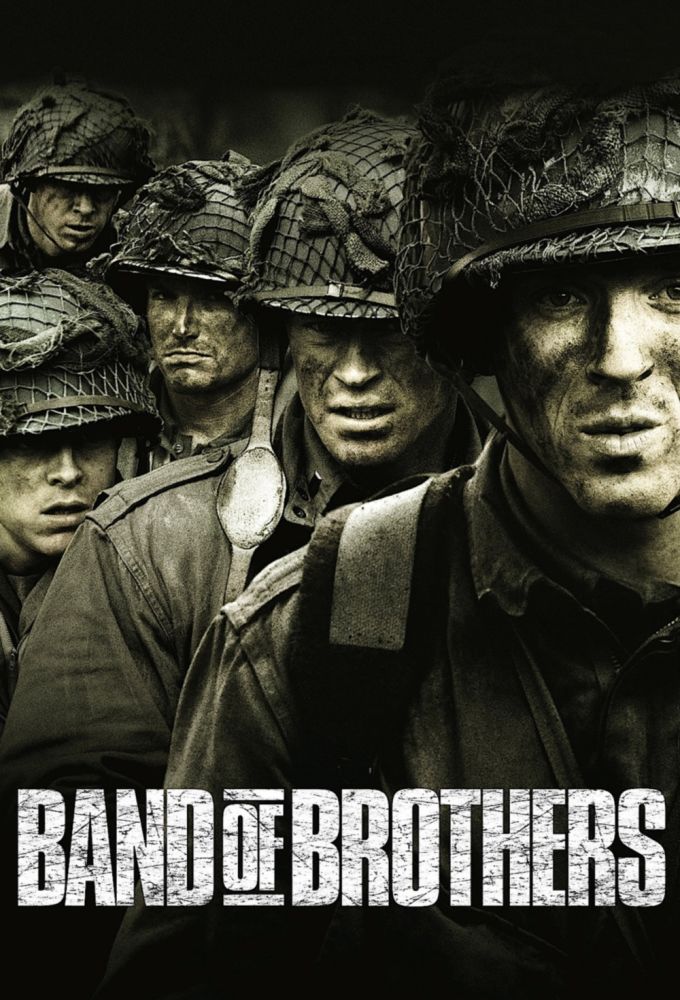
Band of Brothers
Ended Action Drama War

Band of Brothers

๐Ÿ“… Sep 2001 ๐Ÿ“บ 1 Season(s)
9.0
โ˜… โ˜… โ˜… โ˜… โ˜… โ˜… โ˜… โ˜… โ˜… โ˜…
TVmaze rating / 10
Watch Trailer

Synopsis

Drawn from interviews with survivors of Easy Company, as well as their journals and letters, Band of Brothers chronicles the experiences of these men from paratrooper training in Georgia through the end of the war. As an elite rifle company parachuting into Normandy early on D-Day morning, participants in the Battle of the Bulge, and witness to the horrors of war, the men of Easy knew extraordinary bravery and extraordinary fear - and became the stuff of legend. Based on Stephen E. Ambrose's acclaimed book of the same name.

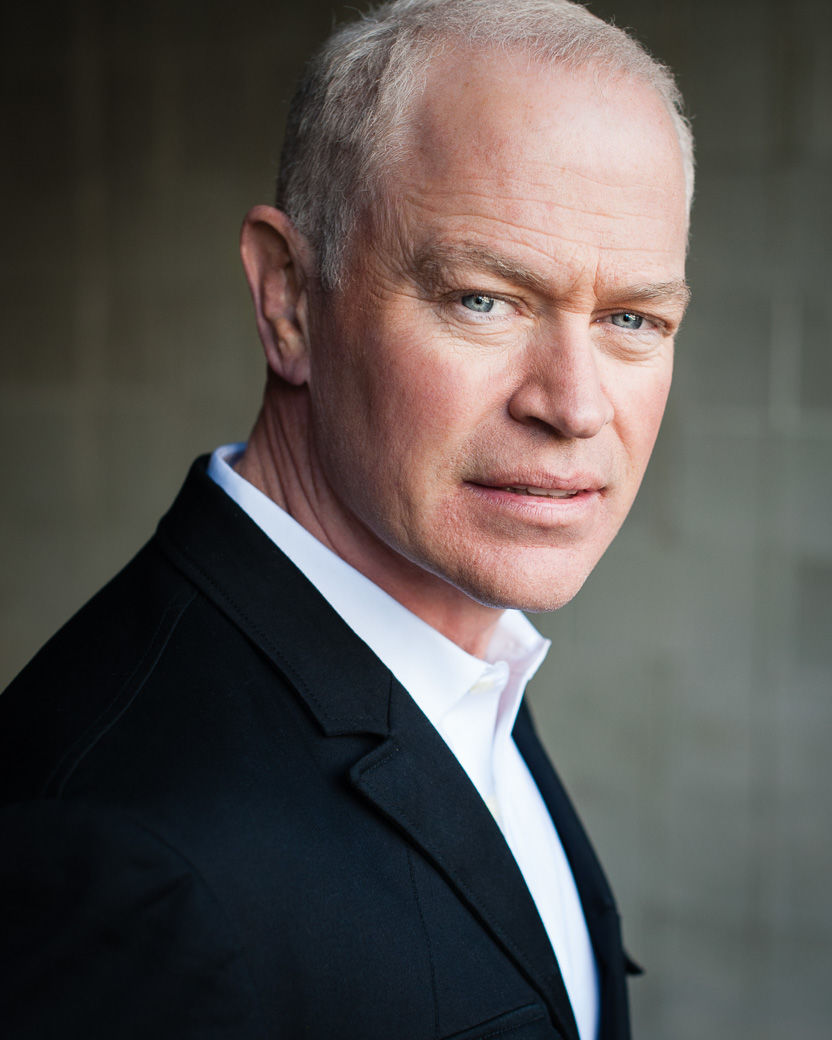
๐ŸŽญ Stars & Actors

Why it is worth knowing

Band of Brothers is a 2001 ten-part war miniseries developed for television by Steven Spielberg and Tom Hanks, based on Stephen E. Ambrose's nonfiction book. It follows Easy Company of the U.S. Army's 506th Parachute Infantry Regiment from training through the end of the Second World War in Europe. Damian Lewis plays Richard Winters within a large ensemble including Ron Livingston, Donnie Wahlberg, David Schwimmer, Michael Cudlitz, Neal McDonough and many others. Each episode changes emphasis, allowing leadership, combat, medicine, replacement soldiers and liberation to be seen from different positions. The drama uses real names and extensive research but remains a shaped screen adaptation.

What Band of Brothers explores

Brotherhood is created through shared preparation, danger and memory, not through the absence of conflict. Leadership matters because poor decisions can expose an entire company, while calm competence gives others room to function. The series studies the distance between training and experience, as well as the gap between veterans and replacements arriving after relationships have formed. Courage appears alongside fear, exhaustion, anger and lasting psychological harm. Memory frames the project through veteran interviews, reminding viewers that the drama represents lives recalled many decades later. Respect for service should exist beside careful historical inquiry rather than turning every dramatised scene into unquestioned fact.

Season and episode guide

Season 1

Easy Company, 506th Regiment of the 101st Airborne Division, U.S. Army, is an elite rifle company. Parachuting into France early on D-Day morning, fighting in the Battle of the Bulge, and capturing Hitler's Eagle's Nest at Berchtesgaden, they were also a unit that suffered 150 percent casualties, and whose lives became legend.

10 episodes ยท 2001
  1. 1. Currahee (Sep 10, 2001)
  2. 2. Day of Days (Sep 10, 2001)
  3. 3. Carentan (Sep 17, 2001)
  4. 4. Replacements (Sep 24, 2001)
  5. 5. Crossroads (Oct 1, 2001)
  6. 6. Bastogne (Oct 8, 2001)
  7. 7. The Breaking Point (Oct 15, 2001)
  8. 8. The Last Patrol (Oct 22, 2001)
  9. 9. Why We Fight (Oct 29, 2001)
  10. 10. Points (Nov 5, 2001)

In-depth guide

The ten-part route from training to war's end

The opening episode follows Easy Company at Camp Toccoa under the harsh command of Herbert Sobel, then through preparation in England. The Normandy landings separate paratroopers and force small groups to work before full units regroup. Later episodes cover operations around Carentan, the Netherlands, Bastogne and Germany, but the series is not organised only as a list of battles. One chapter follows medic Eugene Roe during the siege of Bastogne, another places replacement soldier David Webster near the centre, and another examines an officer struggling with responsibility. Liberation of a concentration camp changes the moral scale of what soldiers have encountered. The final episode reaches Austria and the transition from combat toward uncertain return home. New viewers may initially find the large cast difficult to identify because helmets and uniforms reduce visual differences. Following Winters and a few recurring figures is enough; names become familiar through action, and each episode clearly establishes its immediate viewpoint.

Verified Jul 16, 2026

An ensemble where leadership changes the room

Damian Lewis gives Winters quiet attention and authority based on preparation rather than display. Ron Livingston's Lewis Nixon offers intelligence, friendship and a different personal response to sustained service. David Schwimmer makes Sobel abrasive and insecure while showing how difficult training can still produce practical readiness. Donnie Wahlberg gives Carwood Lipton steady concern for morale, and Michael Cudlitz makes Bull Randleman physically reliable without turning him into a simple action figure. Shane Taylor's Eugene Roe brings the medical burden into focus, while Ross McCall, Scott Grimes, Rick Gomez and others create overlapping friendships and arguments. The famous cast also includes performers who later became widely known in brief roles. The series avoids one continuous heroic lead by shifting attention across ranks and specialties. That structure shows how command, communication, medicine, supply and ordinary mutual care all contribute to survival. No performance can reproduce the real person completely, but the ensemble creates clear human stakes within large military movement.

Verified Jul 16, 2026

Large-scale television built around physical detail

The production used extensive outdoor sets, uniforms, vehicles, practical effects and military training to give movement and equipment consistent weight. Different directors handled episodes within an established visual approach, allowing viewpoint to change without making the miniseries feel disconnected. Handheld cameras, desaturated colour and dense sound place viewers close to confusion during combat, while maps and briefings provide just enough geography. Michael Kamen's main theme adds reflection and mourning rather than constant triumph. Veteran interview extracts appear without names before episodes, allowing testimony to frame emotion without immediately revealing every survival outcome. Combat effects can be graphic, but the most lasting production choices often involve waiting in cold, searching ruined spaces or trying to hear an order. The series helped establish that television could support feature-scale war production across many hours. Its realism is created through craft and research, yet every battle remains edited and reconstructed rather than direct historical footage.

Verified Jul 16, 2026

Dramatisation, testimony and historical limits

Band of Brothers draws from interviews, Ambrose's book, military records and consultation, but later research has corrected or debated some individual details. Memory can change over time, records can conflict and screen drama compresses events. The Sobel portrayal, the identity of a German officer and specific actions assigned to individuals are examples viewers should explore through historical work rather than assuming the series is final. The focus on one American company also means many Allied units, civilians, resistance members, Soviet forces and victims of Nazi persecution remain outside its main view. The concentration-camp episode is emotionally central, but broader Holocaust history requires survivor testimony and specialist sources. These limits do not remove the value of following Easy Company. They clarify what kind of value it offers: a focused dramatic memory of service, leadership and loss. Responsible viewing honours the people represented while remaining willing to distinguish testimony, adaptation and documented fact.

Verified Jul 16, 2026

Episode commitment and severe content guidance

The miniseries contains graphic battlefield wounds, severed limbs, shootings, explosions, death, strong language, antisemitism, concentration-camp victims, suicide, alcohol use and sustained psychological distress. Bastogne and Why We Fight are particularly difficult, though every combat episode includes danger. It is intended for mature teenagers and adults, and schools or families should provide historical context and room to pause. There are ten episodes, generally close to one hour each, and they should be watched in order. The Pacific and Masters of the Air are separate companion miniseries about different wartime groups, not later seasons of Easy Company's story. Viewers sensitive to realistic combat sound or Holocaust imagery should check episode-specific warnings. For factual follow-up, use the U.S. Army Center of Military History, National WWII Museum and Holocaust museums. The series can encourage historical interest, but emotional authenticity is not the same as complete historical coverage.

Verified Jul 16, 2026

Frequently asked questions

How many episodes are in Band of Brothers?

The miniseries has ten episodes and tells a complete story from training through the end of the European war.

Is Band of Brothers a true story?

It follows real Easy Company members and events, but scenes, dialogue, chronology and some character details are adapted and should be checked against historical sources.

Are The Pacific and Masters of the Air sequels?

They are companion miniseries from related producers, focusing on different people and theatres of the Second World War rather than continuing Easy Company.

Continue the story

Explore beyond Band of Brothers

Move between season information, connected performers, streaming services and other series guides.

Season and episode guide

Review the available season structure and individual episode records on this page.

Follow the cast

Explore actors across their connected film and television work.

Browse people

Discover more series

Return to the series library to explore another genre or status.

Browse series