
In-depth guide
Seven episodes from orphanage to international play
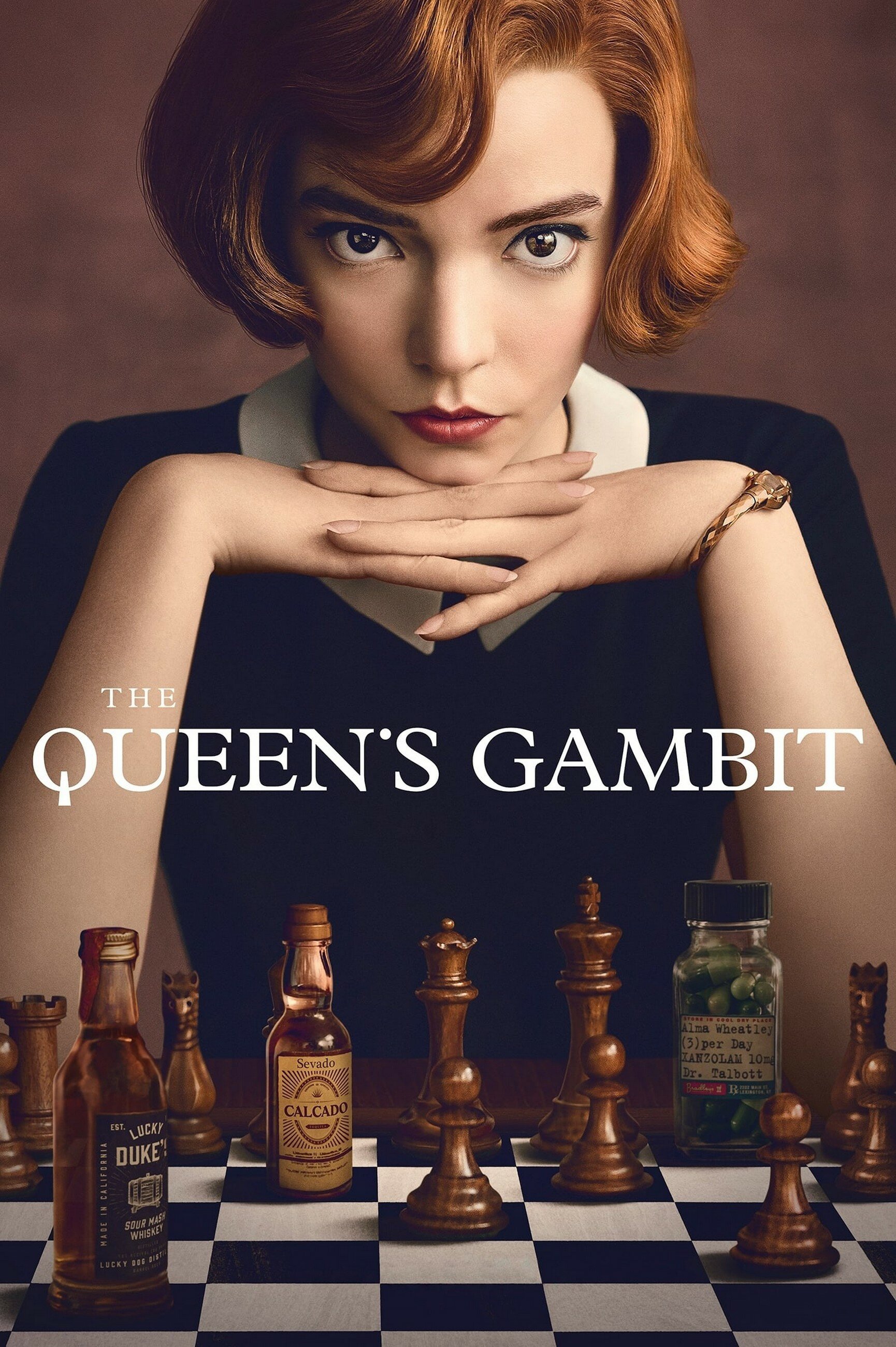
After losing her mother, young Beth enters the Methuen Home, where children are given tranquilising pills and expected to follow strict routines. Custodian Mr Shaibel teaches her chess in the basement after recognising her ability. Beth visualises positions on the ceiling at night, connecting the game with both imagination and medication. Adopted by Alma and Allston Wheatley, she enters local tournaments and quickly faces stronger players including Harry Beltik, Benny Watts and Townes. Travel and prize money create independence, but alcohol and pills become increasingly tied to loneliness and performance pressure. The story moves toward competition with Soviet champion Vasily Borgov, whose preparation represents a chess culture built around teams. All seven episodes should be watched in order. Tournament results matter, but the deeper progression is whether Beth can accept help and play from preparation rather than chemical certainty. Avoid finale images if you want the last match preserved.
Verified Jul 16, 2026
Taylor-Joy makes thought visible
Anya Taylor-Joy gives Beth a controlled public gaze and small private reactions, allowing calculation to appear without constant explanatory dialogue. Her posture and clothes change as money and confidence grow, while moments of addiction break that control. Isla Johnston creates continuity by giving young Beth the same attention and guarded need. Marielle Heller makes Alma funny, wounded and capable of becoming a real partner in Beth's career despite serious problems of her own. Moses Ingram gives Jolene directness and a life not limited to waiting for Beth, though the story could give her more independent screen time. Thomas Brodie-Sangster makes Benny competitive and generous in ways that are not always gentle. Harry Melling gives Harry sincere respect and a willingness to recognise his limits. Bill Camp's Mr Shaibel establishes chess as patient work rather than magic. The ensemble gradually transforms former opponents into a community of people able to contribute without taking Beth's final choices away.
Verified Jul 16, 2026
Making chess understandable without simplifying it into luck
Chess consultant Bruce Pandolfini and former world champion Garry Kasparov contributed to game preparation. Actors learned movement and sequences so hands, clocks and notation appear connected to real play. Viewers are not expected to calculate every position. Camera placement, editing, opponent reactions and Carlos Rafael Rivera's score communicate changing advantage and pressure. Production design moves through orphanage rooms, American hotels, Mexico City, Paris and Moscow, while costume designer Gabriele Binder uses Beth's clothing to express control, influence and sometimes a chessboard's geometry. Ceiling visualisations turn internal calculation into an image without claiming that every strong player literally sees pieces that way. The period world is stylised but grounded in travel, newspapers and tournament procedure. Matches vary in length so the series avoids repeating one format. The final competition gains weight because earlier episodes taught viewers about preparation, adjournment, time and how Beth responds when an opponent leaves her expected line.
Verified Jul 16, 2026
Chess ability does not cure addiction
The series links Beth's early visualisation with tranquilising pills, creating her belief that chemical use unlocks talent. Her ability existed in the patient lessons with Mr Shaibel, however, and later preparation shows that memory, study and collaboration can support it without intoxication. Recovery is not presented as one clean decision; alcohol, grief and access continue to create risk. The show has received praise for giving a woman authority within a competitive story without making every male player a hostile stereotype. It also simplifies some period sexism and gives Beth unusually rapid institutional acceptance compared with barriers real women faced. That choice keeps focus on personal growth but should not replace history of women's chess. Beth is fictional, while players such as Vera Menchik, Nona Gaprindashvili and others have documented careers. Viewers interested in the real history should follow the drama with biographies and chess organisations rather than searching for a single real Beth Harmon.
Verified Jul 16, 2026
Complete miniseries and mature content
The Queen's Gambit has seven episodes and tells a complete story. Content includes a parent's death, suicide context, orphanage mistreatment, tranquilliser dependence, alcohol addiction, drug use, sex, nudity, strong occasional language and grief. It is intended for mature teenagers and adults under most classifications. The addiction material may be difficult for viewers with related experience, and pills are shown as both institutional control and later personal dependence. Chess-playing children may enjoy the competitive story, but parents should not assume the miniseries is family content because the game is central. No chess knowledge is required; official beginner resources can explain notation afterward. The ending does not require a second season, and reports or speculation about continuation should not be treated as part of the completed screen story unless officially confirmed. Streaming availability remains region-dependent.
Verified Jul 16, 2026