Tensions in the Middle East have surged following a stern exchange between former US President Donald Trump and Iranian officials regarding the strategically vital Strait of Hormuz. On Sunday, Iran issued a sharp rebuke to Trump's recent threats demanding the reopening of the crucial shipping lane, accusing his administration of reckless escalation that risks dragging the United States into severe regional instability. The verbal confrontation comes amidst an ongoing conflict involving the US, Israel, and Iran in West Asia, intensifying concerns over potential military escalation.
Key points
- Former US President Donald Trump issued a forceful ultimatum to Iran, demanding the immediate reopening of the Strait of Hormuz and threatening severe military action if Tehran did not comply.
- Iran's Parliament Speaker, Mohammad Bagher Ghalibaf, strongly condemned Trump's remarks, accusing them of being reckless and driven by Israeli interests, particularly those of Prime Minister Benjamin Netanyahu.
- Ghalibaf warned that such actions could lead the US into a "living hell" and ignite the entire region, emphasizing that war crimes would yield no gains.
- A senior Iranian military official, General Ali Abdollahi Aliabadi, echoed the strong rejection, describing Trump's statements as "helpless, nervous, unbalanced and stupid."
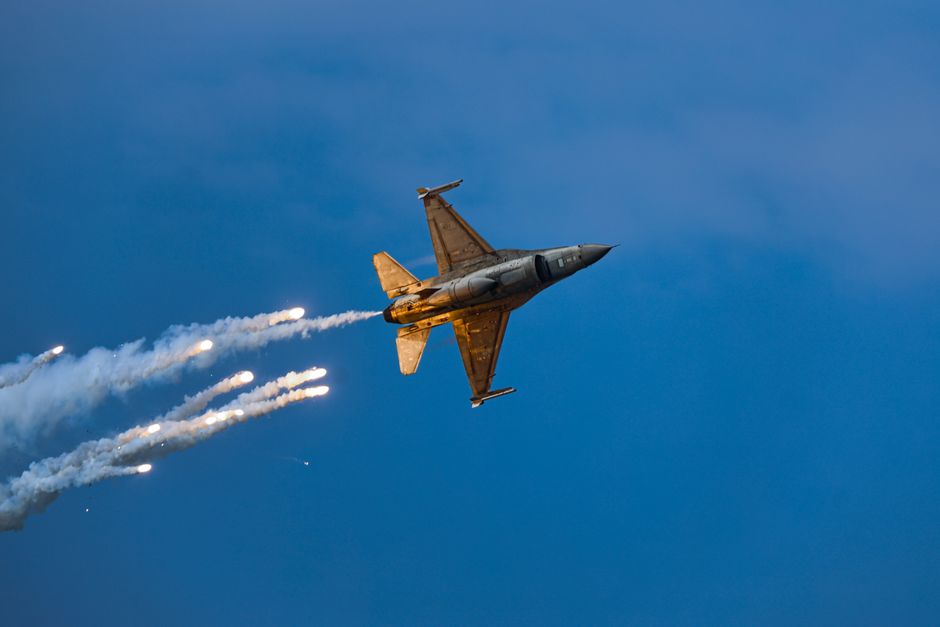
- The exchange follows recent reports of an American F-15 fighter jet being shot down by Iranian air defenses, an incident Trump claimed resulted in a successful rescue operation of a wounded crew member.
- These developments are set against the backdrop of an intensifying conflict in West Asia that began on February 28, involving the United States, Israel, and Iran.
What we know so far
The recent escalation began with former US President Donald Trump issuing a series of warnings to Iran concerning the Strait of Hormuz, a critical global oil shipping route. Trump's messages, shared on social media platforms, included a direct ultimatum demanding the strait's reopening. He threatened profound military consequences, stating, "Tuesday will be Power Plant Day, and Bridge Day, all wrapped up in one, in Iran. There will be nothing like it!!! Open the F****n' Strait, you crazy b*****, or you'll be living in Hell - JUST WATCH! Praise be to Allah." This followed an earlier 48-hour ultimatum where Trump had previously given Iran "ten days to MAKE A DEAL or OPEN UP THE HORMUZ STRAIT," adding, "Time is running out--48 hours before all hell will rain down on them. Glory be to GOD! President DONALD J. TRUMP."
In response, Iran's Parliament Speaker, Mohammad Bagher Ghalibaf, publicly denounced Trump's "expletive-laden 'Tuesday threat'." Ghalibaf accused Trump of "reckless escalation" and alleged that Washington's actions were being influenced by Israeli interests, specifically those of Prime Minister Benjamin Netanyahu. In a direct address, Ghalibaf wrote, "Your reckless moves are dragging the United States into a living HELL for every single family, and our whole region is going to burn because you insist on following Netanyahu’s commands. Make no mistake: You won’t gain anything through war crimes. The only real solution is respecting the rights of the Iranian people and ending this dangerous game."
Adding to Iran's strong rejection, General Ali Abdollahi Aliabadi from Iran’s Khatam al-Anbiya Central Headquarters characterized Trump’s remarks as “a helpless, nervous, unbalanced and stupid action.” He mirrored Trump's threatening tone, stating that "the gates of hell will open for you." This heated exchange of rhetoric is further complicated by recent unconfirmed reports of an American F-15 fighter jet being shot down by Iranian air defenses earlier in the week. Trump claimed US forces successfully conducted a "rare and dangerous mission" to rescue a wounded crew member from deep within Iranian territory following this incident. All these events unfold within the context of a broader, intensifying conflict in West Asia that commenced on February 28, involving the US, Israel, and Iran.
Context and background
The Strait of Hormuz is one of the world's most critical maritime chokepoints, a narrow waterway connecting the Persian Gulf to the open ocean. Approximately one-fifth of the world's total oil consumption, and roughly one-third of the world's seaborne oil, passes through this strait daily. Any disruption to traffic in the Strait of Hormuz has immediate and significant implications for global energy markets, potentially causing oil prices to spike and impacting economies worldwide. For Iran, controlling or threatening to close the strait has historically been a strategic leverage point in its confrontations with the international community, particularly the United States.
The relationship between the United States and Iran has been deeply adversarial since the 1979 Iranian Revolution, which saw the overthrow of the US-backed Shah and the establishment of an Islamic Republic. Decades of mistrust, proxy conflicts, and sanctions have characterized this dynamic. Under the Trump administration, tensions escalated significantly after the US withdrew from the Joint Comprehensive Plan of Action (JCPOA), commonly known as the Iran nuclear deal, in 2018. This withdrawal led to the re-imposition of stringent US sanctions on Iran, part of a "maximum pressure" campaign aimed at crippling Iran's economy and compelling it to negotiate a new, more comprehensive agreement. Iran, in turn, has gradually scaled back its commitments under the nuclear deal and has been involved in various regional actions perceived by the US and its allies as destabilizing.
The broader West Asia region is a complex web of geopolitical rivalries, with the US, Israel, and Iran often at loggerheads. Iran supports various non-state actors and militias across the region, including in Iraq, Syria, Lebanon (Hezbollah), and Yemen (Houthis), which are seen by the US and Israel as proxies extending Iranian influence and threatening their interests. Israel, in particular, views Iran's nuclear program and its regional activities as an existential threat. The alleged downing of a US F-15 fighter jet by Iranian air defenses, if confirmed, would represent a dangerous escalation, raising the specter of direct military confrontation. Such incidents can quickly spiral out of control, especially when coupled with inflammatory rhetoric from high-profile political figures.
The current verbal sparring and military threats underscore the fragility of peace in the region. The use of strong, unparliamentary language by a former US President, and equally strong responses from Iranian officials, reflect a deep-seated antagonism and a lack of diplomatic channels for de-escalation. The invocation of "war crimes" by Iranian officials also highlights their perception of US actions as unlawful and aggressive, further hardening their stance. This situation matters because any miscalculation could lead to a direct military conflict with devastating consequences for the region and the global economy.
What happens next
In the immediate future, rhetoric from both sides is likely to remain charged, though direct military action stemming from these specific threats remains uncertain. The focus will be on whether the Strait of Hormuz sees any actual disruption or if Iran takes any concrete steps in response to the US ultimatum. International bodies and diplomatic channels will likely be working behind the scenes to urge de-escalation and prevent any actions that could trigger a broader conflict. Global energy markets will be closely monitoring the situation for any signs of instability that could affect oil supply. The alleged F-15 incident will require further investigation and could become a flashpoint if more definitive details emerge or if either side seeks retaliation. The ongoing conflict in West Asia, which began in late February, will continue to be a significant backdrop, with the potential for further proxy engagements or direct clashes between the involved parties.
FAQ
- What is the Strait of Hormuz?
The Strait of Hormuz is a narrow, strategically vital waterway connecting the Persian Gulf to the Arabian Sea and the Indian Ocean. It is a critical chokepoint for global oil shipments. - Why is the Strait of Hormuz important?
It is crucial because a significant portion of the world's seaborne oil passes through it, making its security essential for global energy supplies and economic stability. - What were Trump's threats about?
Former President Trump issued an ultimatum demanding Iran reopen the Strait of Hormuz and threatened severe military action, including targeting "Power Plant Day, and Bridge Day," if Iran failed to comply. - How did Iran respond to Trump's threats?
Iranian officials, including Parliament Speaker Mohammad Bagher Ghalibaf and General Ali Abdollahi Aliabadi, strongly condemned Trump's remarks, calling them reckless, unbalanced, and a path to "living hell" for the US. - What other recent incident has heightened tensions?
Tensions are also high following unconfirmed reports of an American F-15 fighter jet being shot down by Iranian air defenses, which reportedly led to a US rescue mission.