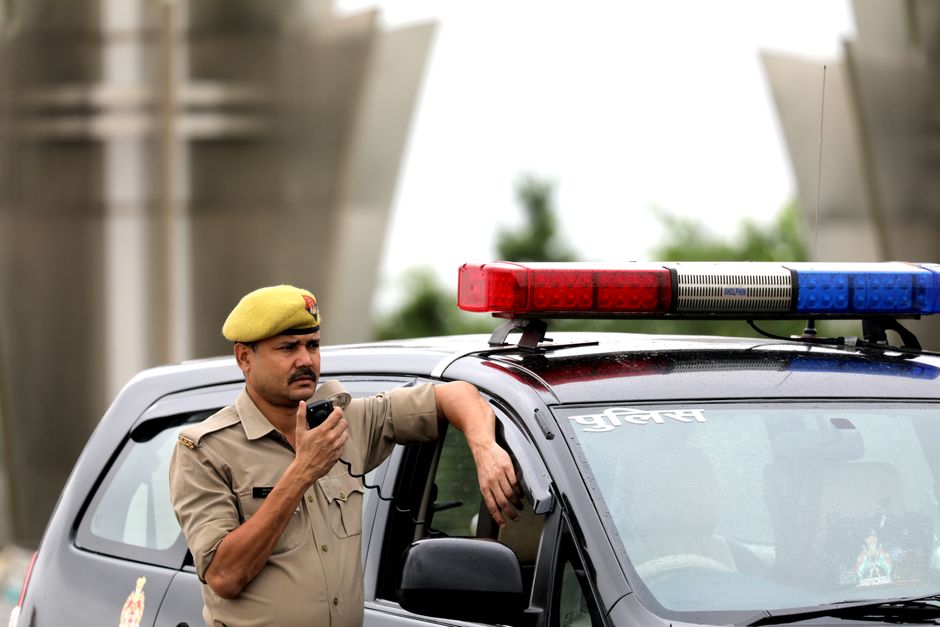

A suspected operative with alleged links to the Islamic State of Iraq and Syria (ISIS) was apprehended in Kushinagar district, Uttar Pradesh, on Saturday night. The arrest was the result of a coordinated effort by a joint team comprising the Uttar Pradesh Anti-Terrorist Squad (UP ATS) and Delhi Police, following extensive surveillance and intelligence gathering.
Key points
- A 30-year-old individual named Rizwan was arrested from the Padrauna area of Kushinagar.
- The operation was a joint effort by the UP ATS and Delhi Police based on intelligence inputs.
- Rizwan has a documented history of involvement in terror-related activities, including a prior arrest in 2016 by Mumbai Police.
- He was released from jail in 2023 after serving time for a terrorism case.
- Investigators allege he resumed contact with ISIS-linked operatives through online and encrypted platforms after his release.
- Electronic devices and documents were seized from him, and further interrogation is underway to uncover potential wider connections.
What we know so far
On Saturday night, a joint operation led to the arrest of Rizwan, a 30-year-old man suspected of having ties to the ISIS terror group. The apprehension took place in the Padrauna area of Kushinagar district in Uttar Pradesh. This action followed a period of sustained surveillance and the collection of specific intelligence regarding his alleged connections to various ISIS modules.
Sources indicate that Rizwan is not new to law enforcement scrutiny for terror-related activities. He was previously arrested by Mumbai Police in 2016 in connection with a terrorism case and subsequently remained incarcerated until 2023. During that period, he was accused of actively radicalising young individuals, encouraging them to leave Mumbai and join ISIS. Notably, he was identified as playing a significant role in the radicalisation of an individual named Ayaz Sultan, who reportedly left India to join the extremist organisation.
Following his release from prison, Rizwan reportedly returned to his native district of Kushinagar, where he began operating a food kiosk in Padrauna. However, investigators believe that during this post-release period, he allegedly re-established contact with individuals linked to ISIS. These communications are suspected to have occurred via online platforms and encrypted communication channels, which are often favoured by extremist groups for their perceived security. His renewed activities eventually drew the attention of both central and state intelligence agencies, prompting the coordinated arrest. Officials stated that the operation was conducted discreetly to prevent any public alarm or panic.
Upon his arrest, authorities seized several electronic devices and various documents from Rizwan. These items are currently undergoing examination, with investigators hoping to uncover further leads and evidence. Preliminary interrogation suggests that Rizwan may have been involved in efforts to expand the ISIS network, assist in recruitment drives, or provide logistical support for extremist activities. However, officials have not ruled out the possibility of him having broader connections within the extremist landscape, and questioning continues as part of an ongoing investigation.
Context and background
The arrest of a suspected ISIS operative like Rizwan underscores the persistent challenge of counter-terrorism and radicalisation faced by India and many nations worldwide. ISIS, or the Islamic State of Iraq and Syria, is a Sunni jihadist militant group that emerged prominently in the early 2010s, gaining global notoriety for its extreme violence, territorial control in parts of Iraq and Syria, and its sophisticated use of propaganda and social media to recruit followers globally. While its territorial caliphate has largely been dismantled, the ideology and network of ISIS continue to pose a significant threat through its affiliates and online radicalisation efforts.
India, with its large and diverse population, has been a target for various extremist ideologies. Intelligence agencies, including the UP ATS and Delhi Police, constantly monitor individuals and groups suspected of having ties to such organisations. The internet and encrypted communication channels have become crucial tools for extremist groups to spread their propaganda, radicalise vulnerable individuals, and coordinate activities without direct physical contact. This makes the work of intelligence agencies particularly complex, requiring advanced technical capabilities and human intelligence to track and disrupt these networks.
The case of Rizwan highlights several critical aspects of counter-terrorism. Firstly, it demonstrates the ongoing threat posed by individuals who have previously been involved in extremist activities, even after serving prison sentences. Monitoring such individuals post-release is a significant challenge, requiring continuous vigilance and robust intelligence sharing between different state and central agencies. Secondly, his alleged use of online platforms and encrypted channels after his release illustrates the evolving methods of radicalisation and communication employed by terror outfits. These platforms offer a degree of anonymity, making detection more difficult but not impossible for dedicated agencies.
The involvement of different police and intelligence units, such as the UP ATS and Delhi Police, in a joint operation is a testament to the collaborative approach necessary to combat terrorism effectively. Such inter-agency cooperation is vital for sharing intelligence, coordinating surveillance, and executing arrests across state borders. This arrest serves as a reminder that the battle against extremism is multifaceted, involving not just law enforcement but also efforts to counter radical ideology and prevent vulnerable individuals from falling prey to extremist narratives.
What happens next
Following Rizwan's arrest, several key investigative steps are expected to unfold. The seized electronic devices, including mobile phones, computers, or any storage media, will undergo thorough forensic analysis. This process aims to recover deleted data, identify communication patterns, uncover contacts, and find any plans or instructions related to extremist activities. Similarly, documents will be scrutinised for clues regarding his network, financial transactions, or potential targets.
Rizwan will undergo intensive interrogation by both UP ATS and Delhi Police officials. The primary objective of these questioning sessions will be to ascertain the full extent of his alleged network, identify other operatives or sympathisers, understand the nature of his current activities (whether recruitment, logistical support, or planning specific acts), and determine if he was acting alone or as part of a larger module. Investigators will also seek to confirm the identities of the ISIS-linked operatives he allegedly re-established contact with online.
Based on the findings from the interrogation and forensic analysis, authorities will decide on further legal proceedings, which may include filing charges under relevant anti-terrorism laws. The investigation could expand to other locations or individuals if new leads emerge, potentially leading to more arrests. The focus will remain on dismantling any potential terror networks and preventing future extremist activities.
FAQ
- What is ISIS?
ISIS (Islamic State of Iraq and Syria) is a Sunni jihadist extremist group that gained prominence for its violent ideology, territorial control, and global recruitment efforts, primarily through online propaganda. - Why was Rizwan previously arrested?
Rizwan was previously arrested by Mumbai Police in 2016 on charges related to terrorism and was accused of radicalising youth to join ISIS. - How did authorities track him after his release?
Central and state intelligence agencies maintained surveillance on him, particularly after he allegedly re-established contact with ISIS-linked operatives through online and encrypted communication channels. - What was seized during the arrest?
Electronic devices and various documents were seized from Rizwan's possession, which are now being examined for further evidence and leads. - What are the next steps in the investigation?
The investigation will involve forensic analysis of seized devices, intensive interrogation of Rizwan, and efforts to trace his network and potential accomplices to prevent any future extremist activities.