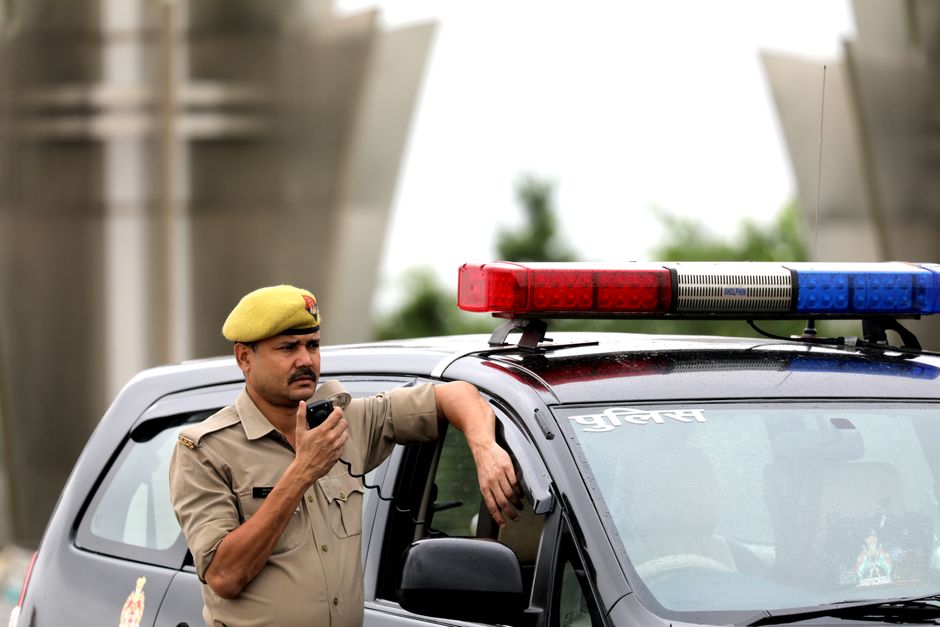

Authorities in Saharanpur, Uttar Pradesh, have arrested two Urdu teachers following the emergence of a disturbing video that allegedly depicts a 10-year-old student being subjected to a physical assault inside a local madrassa. The arrests, which took place on Saturday, were prompted by a formal complaint and the widespread circulation of the footage, which purportedly shows one teacher striking the child with a stick while another restrains him.
Key points
- Two Urdu teachers, aged 25 and 30, have been arrested in Saharanpur, Uttar Pradesh, in connection with the alleged assault.
- The arrests followed the viral circulation of a video showing a 10-year-old student being beaten inside a madrassa.
- The incident itself reportedly occurred approximately eight months ago, but the video only surfaced on April 3 due to internal disputes among madrassa staff.
- The footage allegedly shows one teacher using a stick to hit the child, who is screaming, while another teacher holds the child down.
- A local resident filed a complaint at Gangoh police station, submitting the video and demanding action.
- Police have confirmed that an FIR has been registered, and a detailed investigation is currently underway.
What we know so far
The incident came to public attention after a video, allegedly recorded inside a madrassa in Saharanpur, began circulating widely. This footage purportedly shows a 10-year-old boy being physically disciplined by two adults. According to the visual evidence, one individual is seen repeatedly striking the child with a stick, while another individual holds the struggling child, preventing him from escaping the assault. The child's cries and pleas for release are reportedly audible in the recording.
Police confirmed that the alleged assault took place around eight months prior to the video's emergence. The footage itself reportedly surfaced on April 3, becoming public following an internal disagreement among the staff members of the madrassa. Prompted by the shocking content of the video, a local resident lodged a formal complaint at the Gangoh police station. This complaint included the submission of the video as evidence, urging law enforcement to take stringent measures against those responsible.
Acting on the complaint and the compelling video evidence, police initiated legal proceedings. An FIR (First Information Report) was filed, leading to the arrest of the two accused Urdu teachers on Saturday morning. During questioning, the arrested individuals reportedly informed the police that the child had previously run away from the madrassa. They claimed the beating occurred after the child was brought back to the institution. Authorities stated that the accused teachers had already been removed from their positions at the madrassa shortly after the incident initially occurred, even before their recent arrest. Circle Officer Ashok Kumar Sisodia affirmed that police responded swiftly upon receiving the footage and have commenced a thorough investigation, assuring that strict legal action will be taken against anyone found guilty.
Context and background
This incident throws a spotlight on the critical issue of child protection and the prohibition of corporal punishment within educational institutions, including traditional religious schools like madrassas, across India. Madrassas are Islamic seminaries that primarily impart religious education, though many also integrate secular subjects into their curriculum. Often, these institutions operate as residential schools, placing children under the direct care and supervision of teachers and administrators for extended periods.
Indian law unequivocally prohibits corporal punishment in all educational settings. The Right of Children to Free and Compulsory Education (RTE) Act, 2009, specifically bans physical punishment and mental harassment of children. Furthermore, provisions under the Indian Penal Code (IPC) address assault and voluntarily causing hurt, which can be invoked in cases of physical abuse. The Juvenile Justice (Care and Protection of Children) Act, 2015, also outlines responsibilities for the care and protection of children, particularly those in institutional settings, and provides for strict penalties for those who abuse children. Despite these legal safeguards, instances of corporal punishment persist, often rooted in traditional disciplinary practices that are now recognized as harmful and illegal.
The delay in this particular case—where the incident occurred eight months before the video surfaced—highlights several systemic challenges. Firstly, it underscores the difficulty in monitoring and reporting abuse, especially in closed environments. Secondly, it demonstrates the increasing role of digital media and citizen vigilance in bringing such crimes to light. The fact that the video emerged due to an "internal dispute" among madrassa staff suggests that, without such a trigger, the alleged abuse might have remained unaddressed. This emphasizes the need for robust internal grievance mechanisms and external oversight to ensure the safety and well-being of children in all educational institutions.
The vulnerability of children, particularly those in residential facilities, cannot be overstated. They are entirely dependent on their caregivers for safety, nourishment, and education. Any breach of this trust, especially in the form of physical abuse, constitutes a severe violation of their rights and can have lasting psychological and emotional repercussions. This case serves as a stark reminder of the continuous effort required to enforce child protection laws and foster a culture of non-violence in educational environments.
What happens next
Following the arrests, the legal process will now proceed. The police investigation is expected to continue, with officers gathering further evidence, recording statements from witnesses, and potentially interviewing the child victim and their family to build a comprehensive case. The arrested teachers will likely be presented before a magistrate, where their bail applications will be heard. Given the nature of the charges involving a minor, securing bail might be challenging.
Once the investigation is complete, the police will file a charge sheet detailing the accusations against the teachers. The case will then move to trial, where the prosecution will present evidence, including the video footage, and the defense will have the opportunity to present its arguments. The specific charges could include sections of the Indian Penal Code related to voluntarily causing hurt (e.g., Sections 323 or 325) and potentially relevant sections under the Juvenile Justice (Care and Protection of Children) Act, 2015, which addresses cruelty to children. Conviction for such offenses can lead to imprisonment and fines.
Beyond the criminal proceedings, there may also be administrative implications for the madrassa. Authorities could initiate an inquiry into the institution's oversight mechanisms and its failure to prevent or promptly report the incident. Depending on the findings, the madrassa could face penalties, stricter regulatory supervision, or mandates to implement enhanced child protection policies. The welfare of the 10-year-old student will also be a paramount concern, with authorities likely ensuring access to counseling or support services as needed.
FAQ
- What is a madrassa?
A madrassa is an Islamic educational institution, typically offering religious instruction, including the study of the Quran, Islamic law, and Arabic. Many madrassas in India also provide secular education and operate as boarding schools.
- Is corporal punishment allowed in Indian schools or madrassas?
No, corporal punishment is strictly prohibited in all educational institutions across India. Laws like the Right to Education (RTE) Act and provisions under the Indian Penal Code and Juvenile Justice Act criminalize physical abuse against children.
- Why did it take so long for action to be taken if the incident happened eight months ago?
Police confirmed that the incident occurred approximately eight months ago, but the video evidence only surfaced on April 3, reportedly due to an internal dispute among madrassa staff. Action was taken promptly once the video was submitted to the authorities.
- What charges could the teachers face?
The teachers could face charges under various sections of the Indian Penal Code related to assault and voluntarily causing hurt. Depending on the severity and specific circumstances, provisions of the Juvenile Justice (Care and Protection of Children) Act, 2015, which addresses cruelty to children, might also be applied.